Work Status: Built
Lote 7
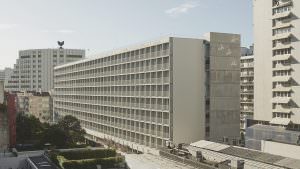
The project is located in Entrecampos, in the centre of Lisbon, on a site left vacant at the end of the 20th century and gradually occupied by formal and informal parking, resulting in a neglected and disordered urban space now undergoing extensive regeneration. This process includes the Armed Forces Housing Development, of which the project […]
Read more →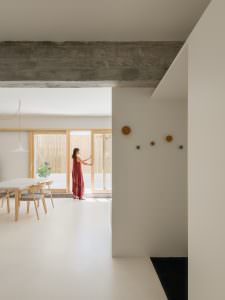
Cascais Apartment
A small apartment designed for intensive use, including its outdoor spaces. A process of demolition, retaining only the structural elements, made it possible to reverse the original layout, reclaiming the courtyard as an extension of the social area of the house. The bedrooms are relocated to a more private part of the apartment, with smaller […]
Read more →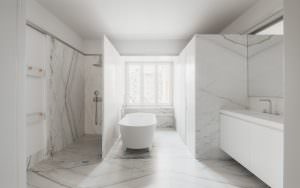
Largo João do Rio Apartment
A family apartment, representative of a formal bourgeois typology from the 1950s, but with an inadequate relationship to solar orientation. Carefully considered, targeted demolitions, together with the reorganisation of the building services, allow for a new layout that takes advantage of visual connections with the exterior without compromising the existing structure. The rooms retain their […]
Read more →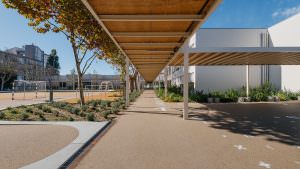
Infante D. Henrique Primary School and Kindergarten
The project aims to refurbish a school site located in a transitional area of the city, where the stigma associated with social housing prevents proximity from translating into a continuous and unified urban fabric. The site, covering almost 8,000 m², includes two independent buildings: the Primary School building, a P3-type modular project, and the Kindergarten […]
Read more →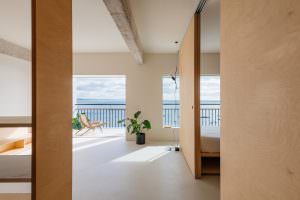
Paço de Arcos Apartment
Paço d’Arcos is a coastal parish in Oeiras, located at the mouth of the Tagus River. Over time, the seasonal seaside apartments became permanent residences and underwent alterations that distorted their seasonal and summer typology, which the project seeks to recover. The demolition of the existing enclosed balcony and the redefinition of the external openings […]
Read more →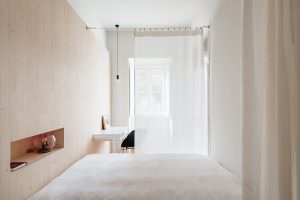
Oeiras Apartment
This is a small apartment, part of the Casa da Quinta da Arriaga, in Oeiras. The original house and its ancillary spaces, located along the western edge of the present-day Oeiras Municipal Garden, were divided into smaller units. This unit, with independent access from the public street, overlooks the garden and the Ribeira da Laje […]
Read more →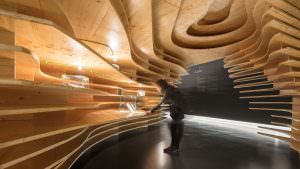
Megalithism Museum
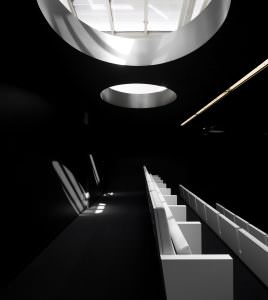
The exhibition is conceived as a journey through a topographic model. It presents an abstract representation of a typical archaeological site, where rigorous geometries and measurements are methodically laid over the natural terrain, marking and defining it. The structure is composed of large-scale timber planes, juxtaposed and interlocked to create a scenographic topography that supports […]
Read more →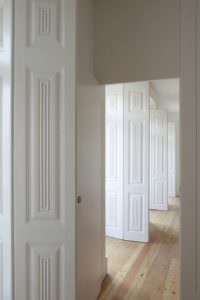
Residential Building in Conde Barão, Lisbon
The project involves the rehabilitation of a building with a Pombaline structure and morphology, preserving and emphasising its defining characteristics while equipping it with services and standards appropriate to the time of the intervention. The existing structure was retained and reinforced, a lift was introduced, and the roof together with its mansard level was reconstructed. […]
Read more →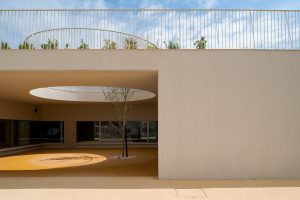
Primary School and Kindergarten in Caselas
The school is located on the boundary between the Caselas neighbourhood and the Monsanto Natural Park in Lisbon. The site occupies a clearing within the woodland, whose presence remains evident in the mature pine forest defining its southern edge and in the large pine tree marking the entrance to the school. The original school was […]
Read more →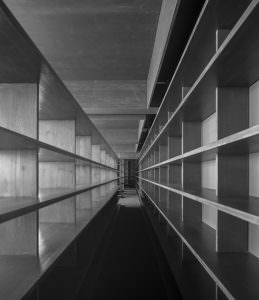
São Paulo Library
In an unremarkable building on the outskirts of Lisbon, intended for the private use of a religious community, a library is conceived as an exceptional space: a place for study, research, work and meetings, comprising a reading room and a storage room. The geometry of the ceiling brings order to the existing, undistinguished structure; colour […]
Read more →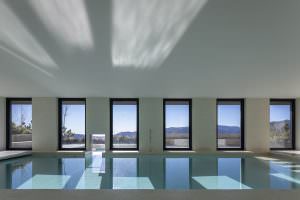
São Lourenço House
The origins of the present-day Casa de São Lourenço date back to the 1940s, when Salazar’s regime promoted the creation of seven small hotels with the aim of celebrating the culture and traditions of Portugal’s different regions, combining the work of modern architects with traditional building practices and vernacular materials. The São Lourenço Inn, inaugurated […]
Read more →