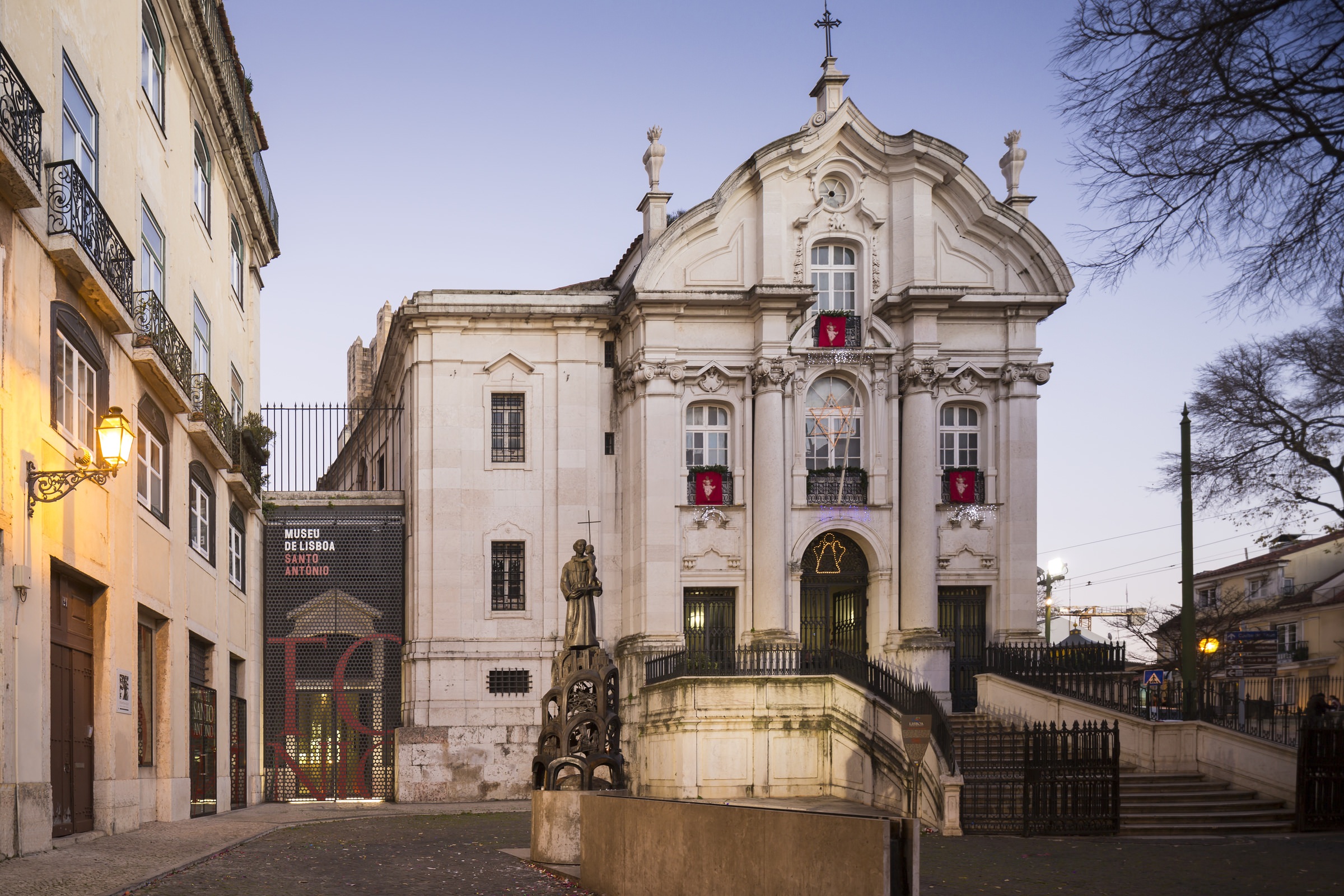
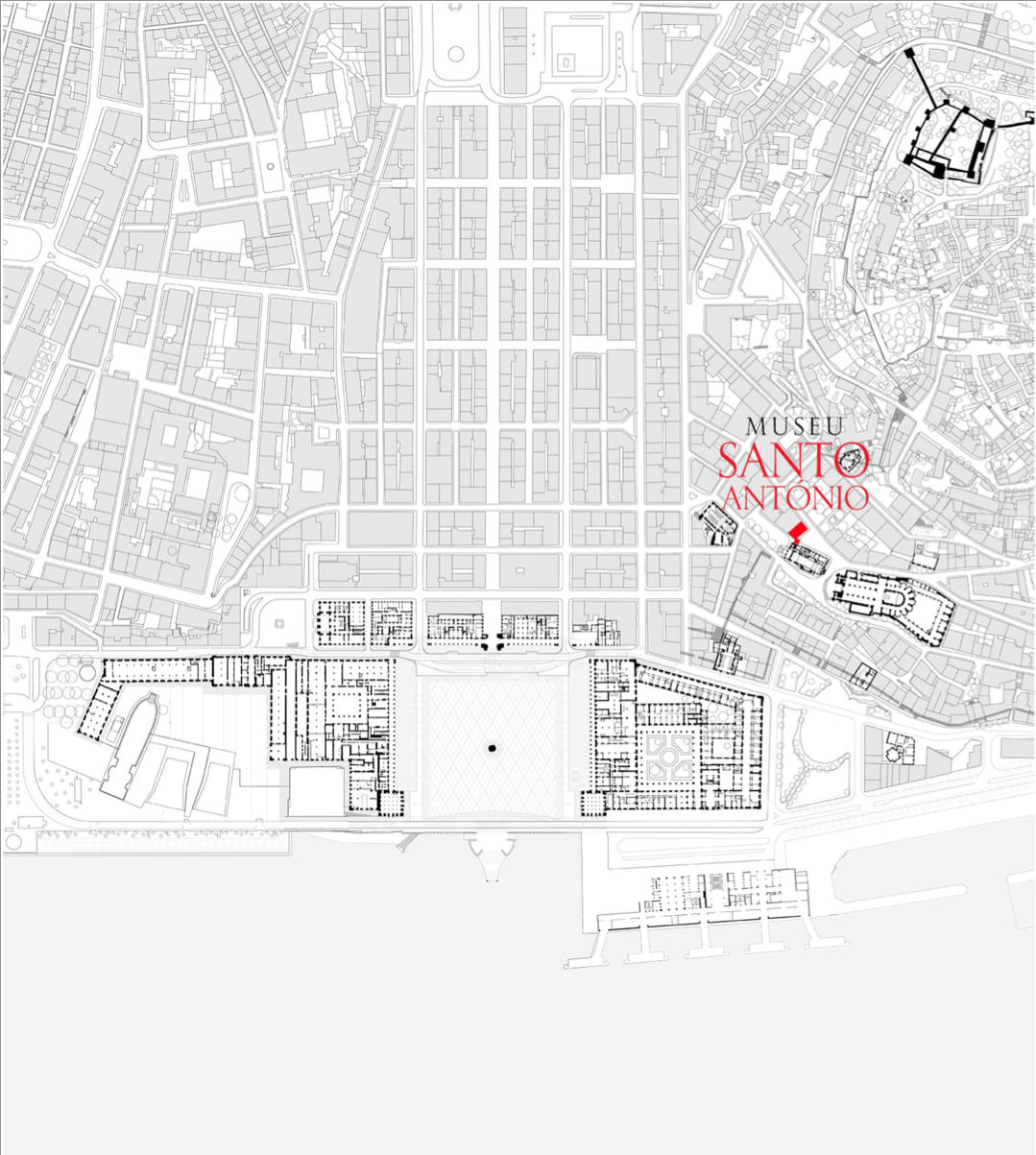
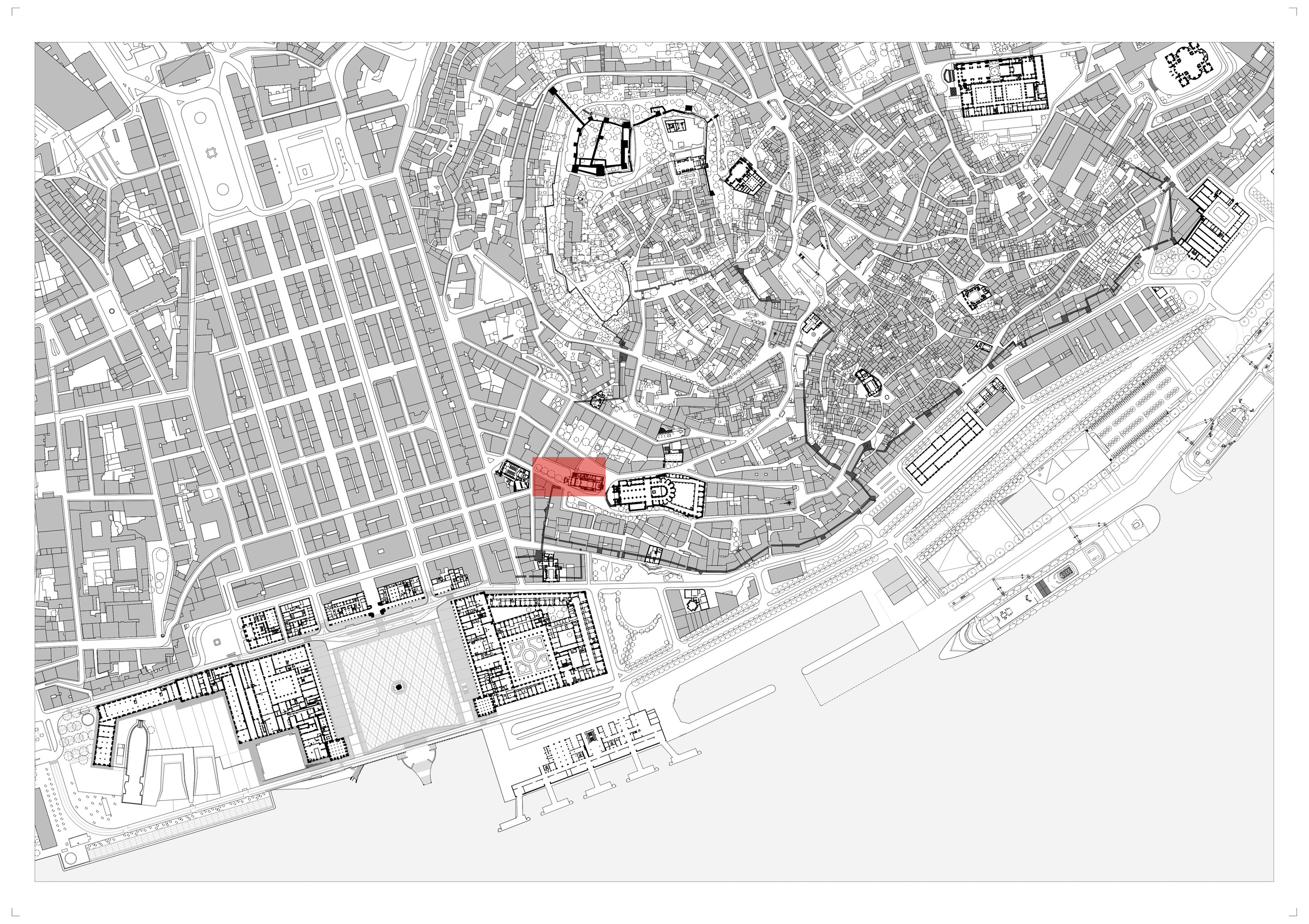
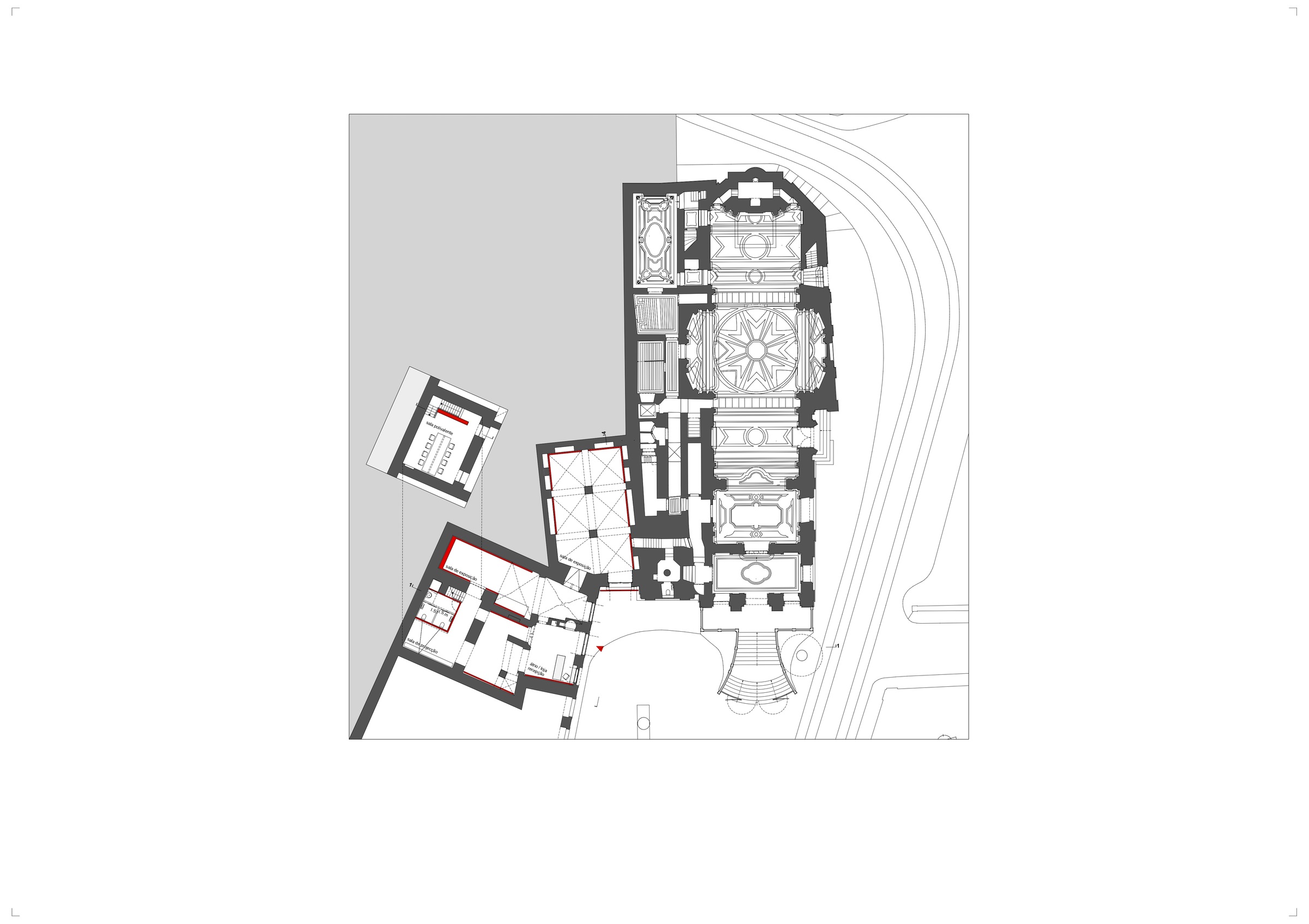
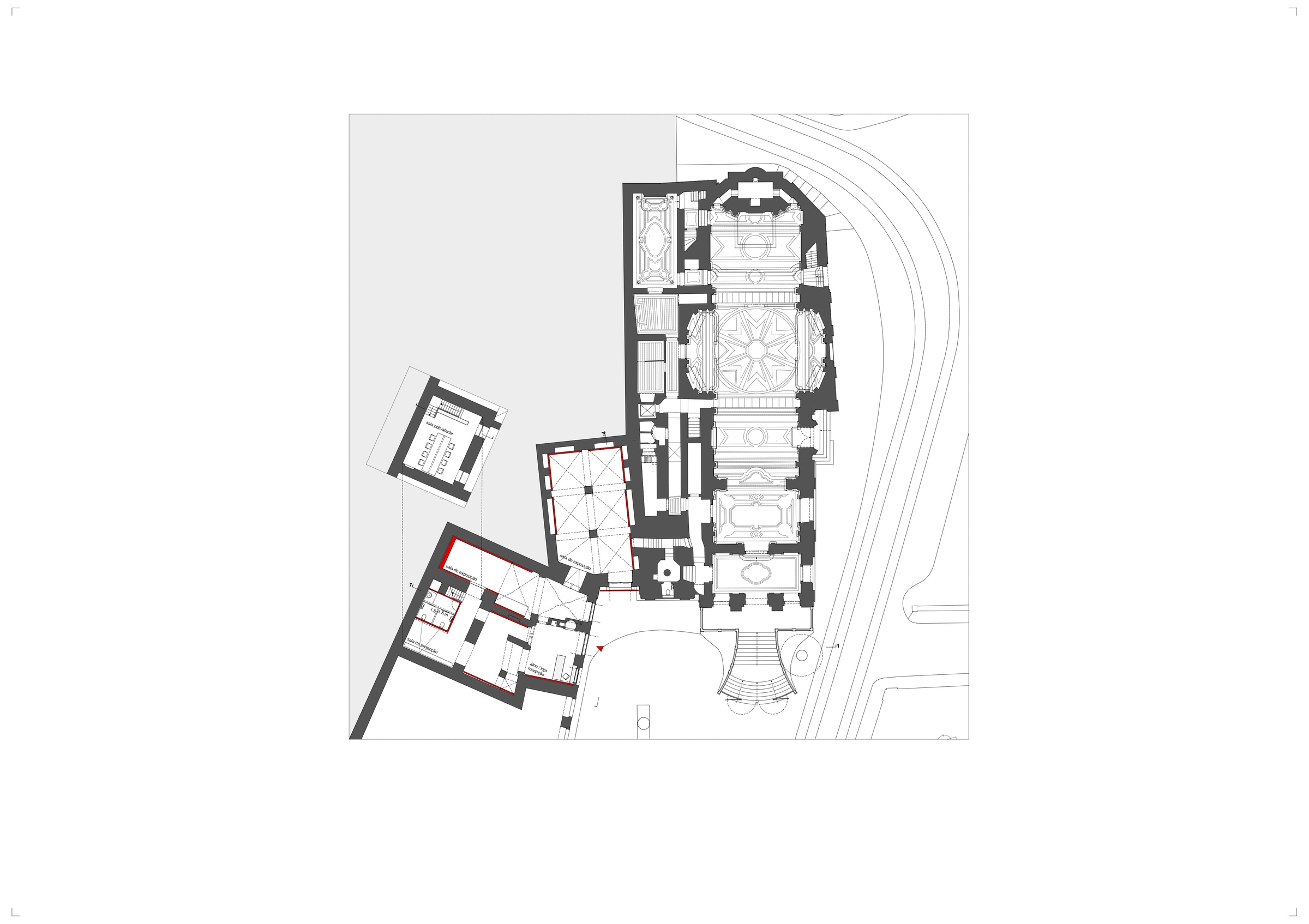
It is located in the historic centre of Lisbon, on the boundary between the Pombaline Downtown district and the Alfama neighbourhood.
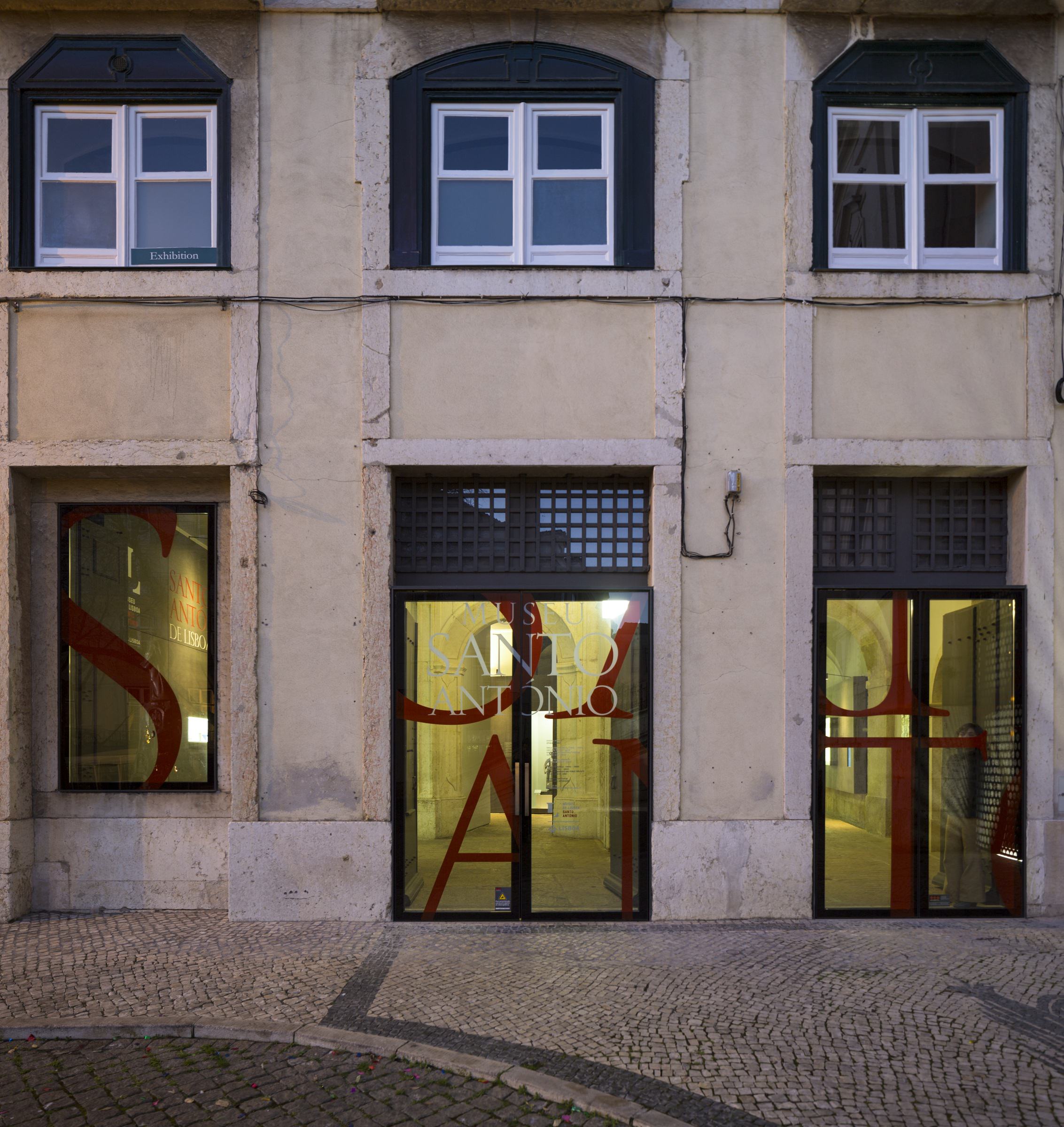
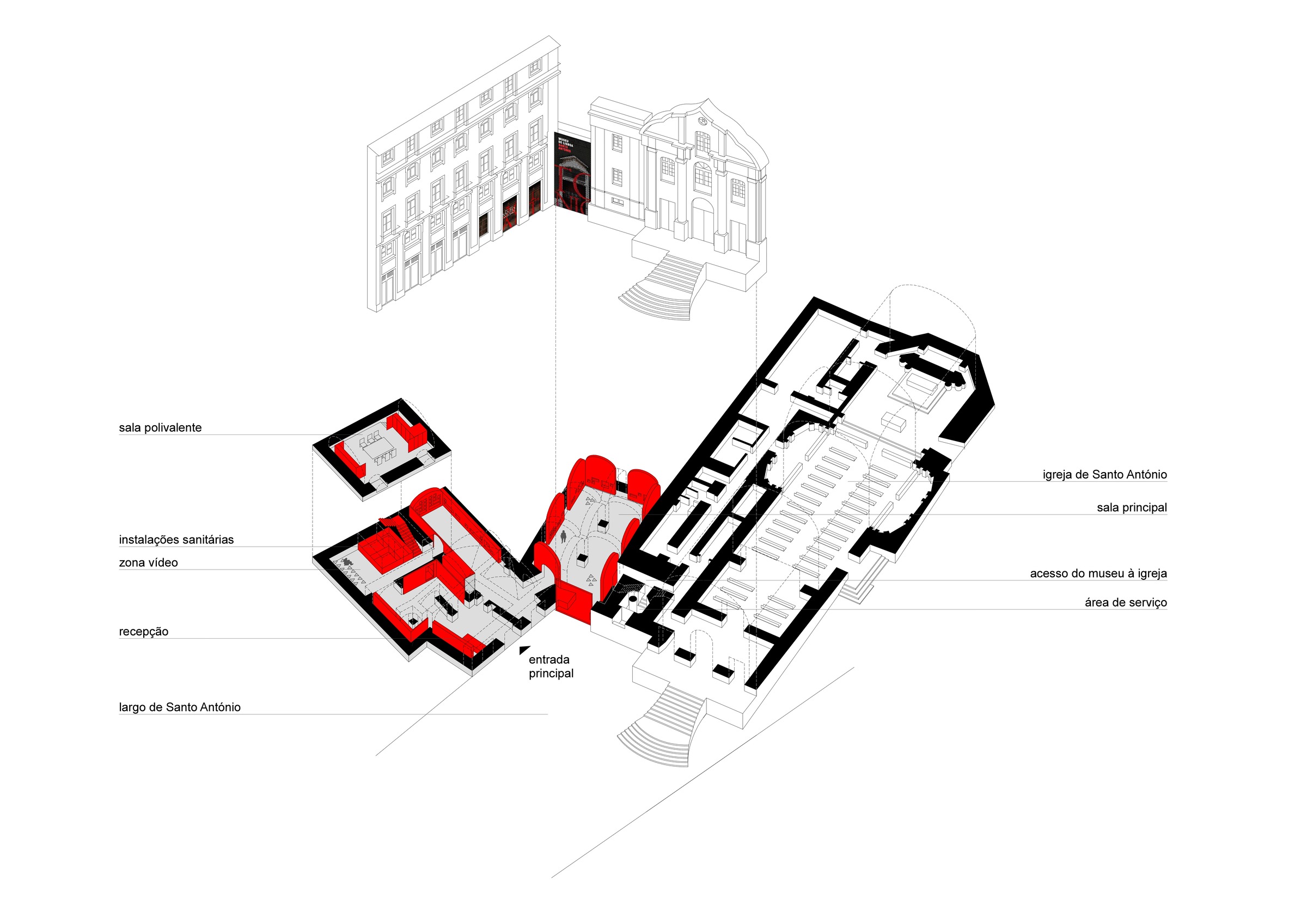
The new Museum occupies the site of the previous one—an area adjacent to the church—and is extended into the adjoining space, part of a residential building originating from the city’s post-earthquake reconstruction programme.
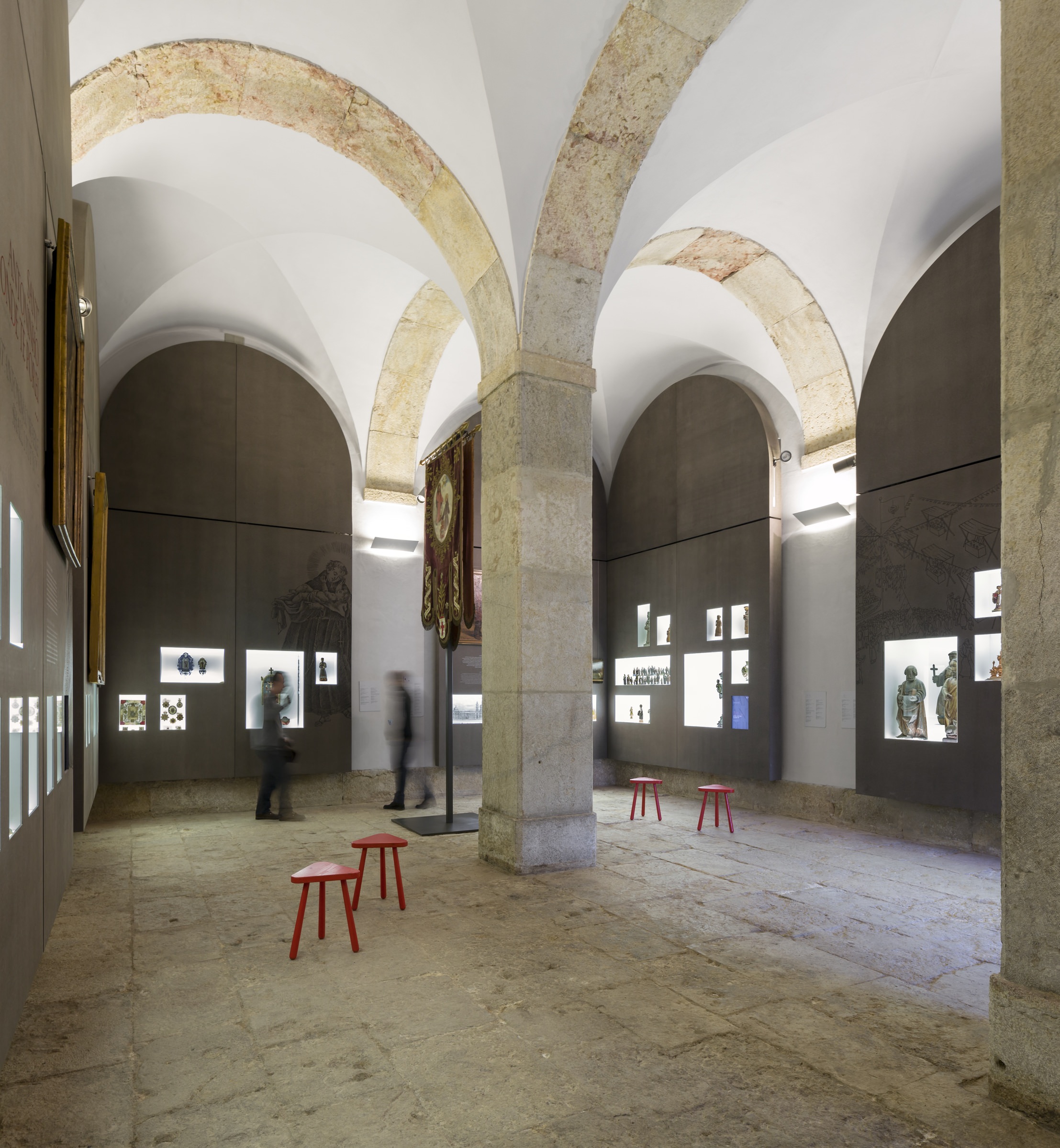
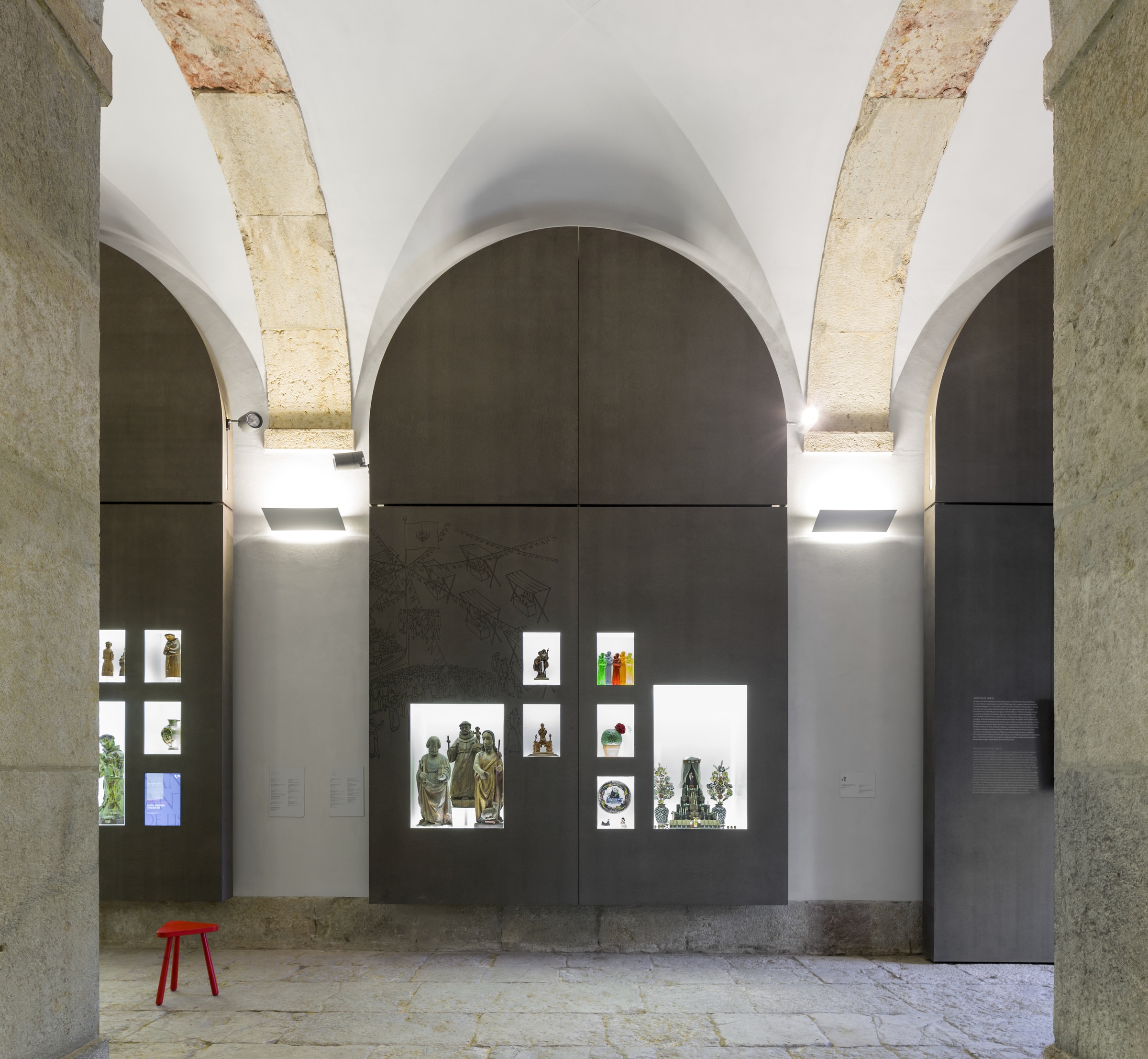
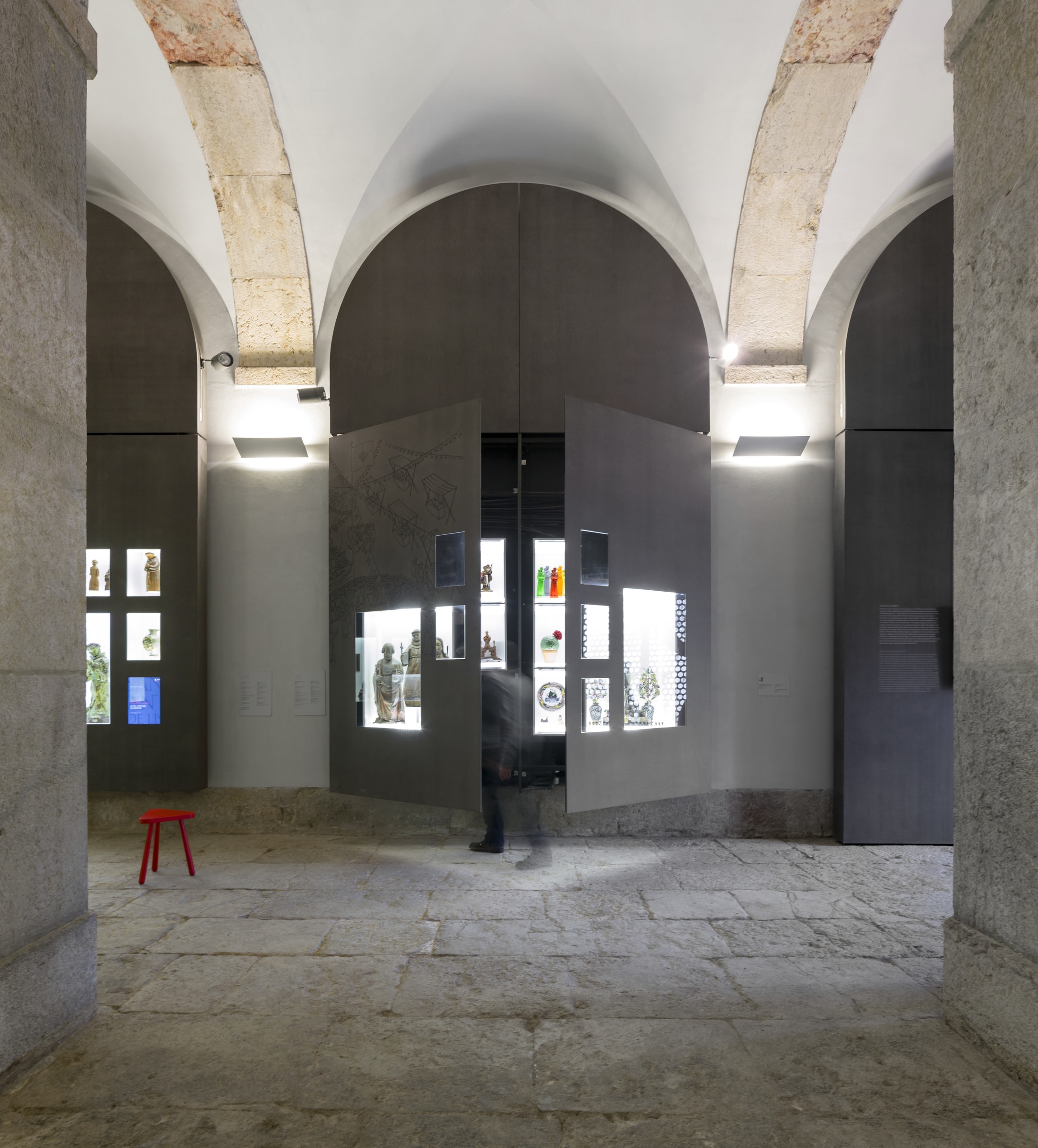
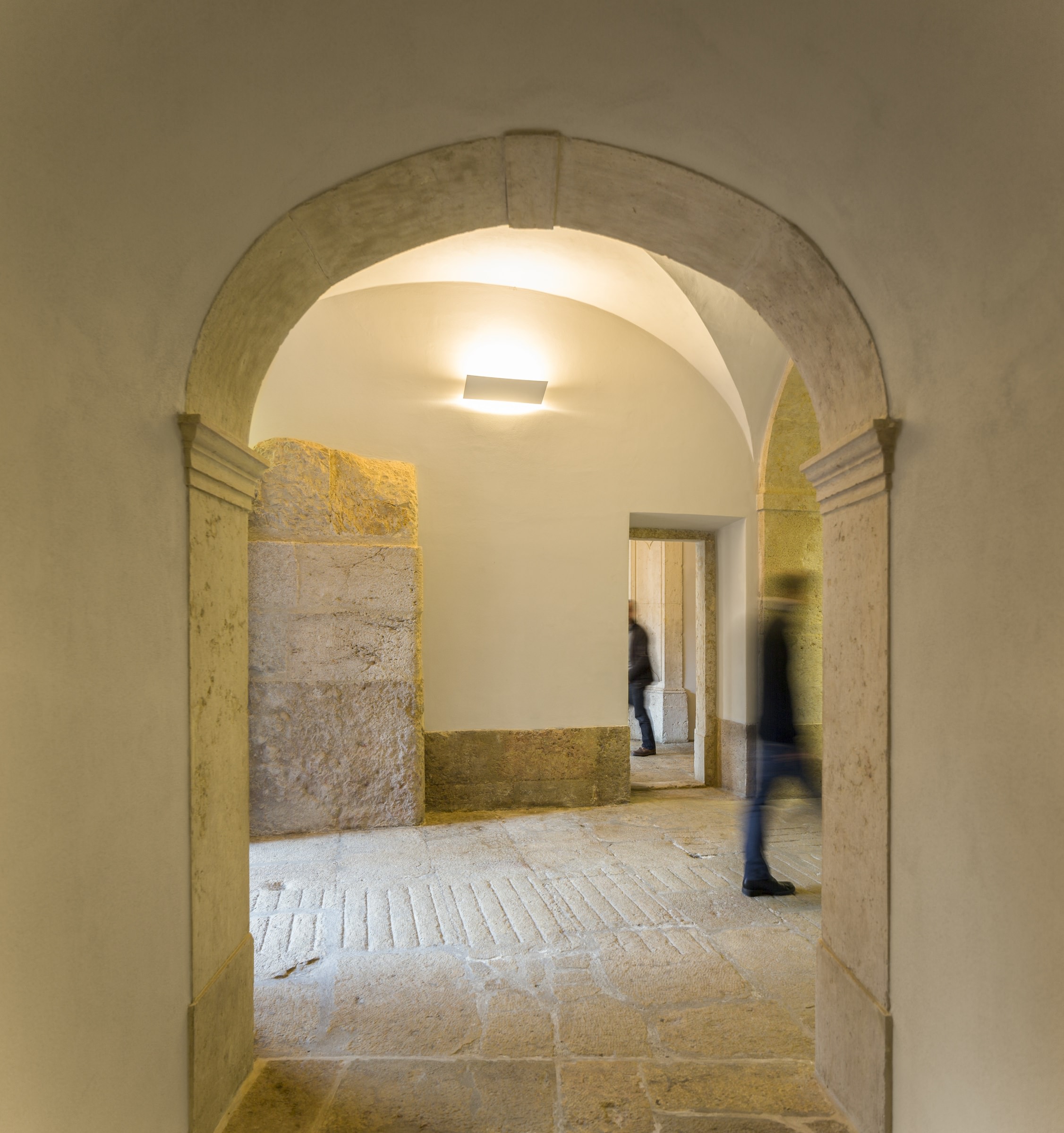
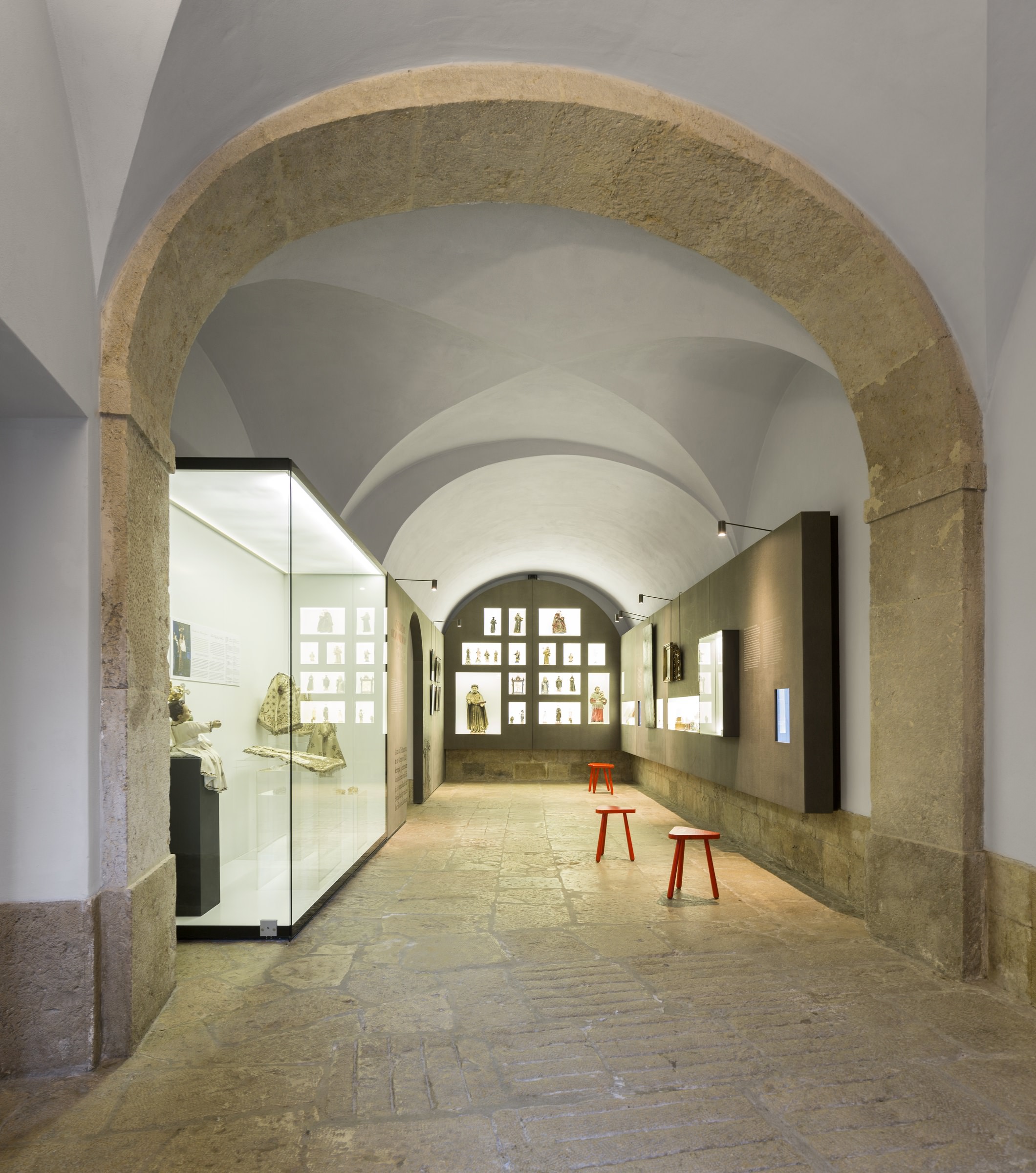
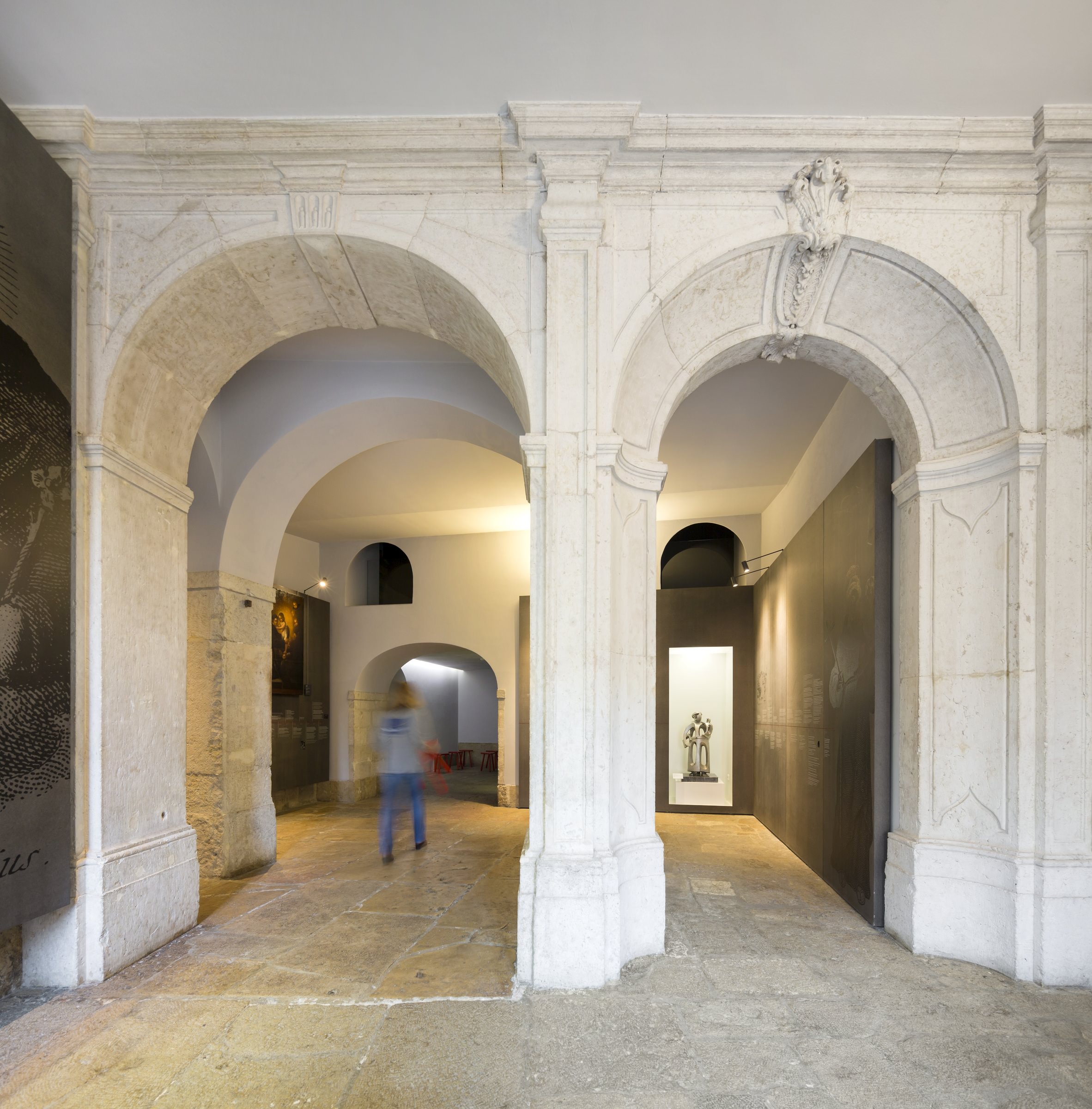
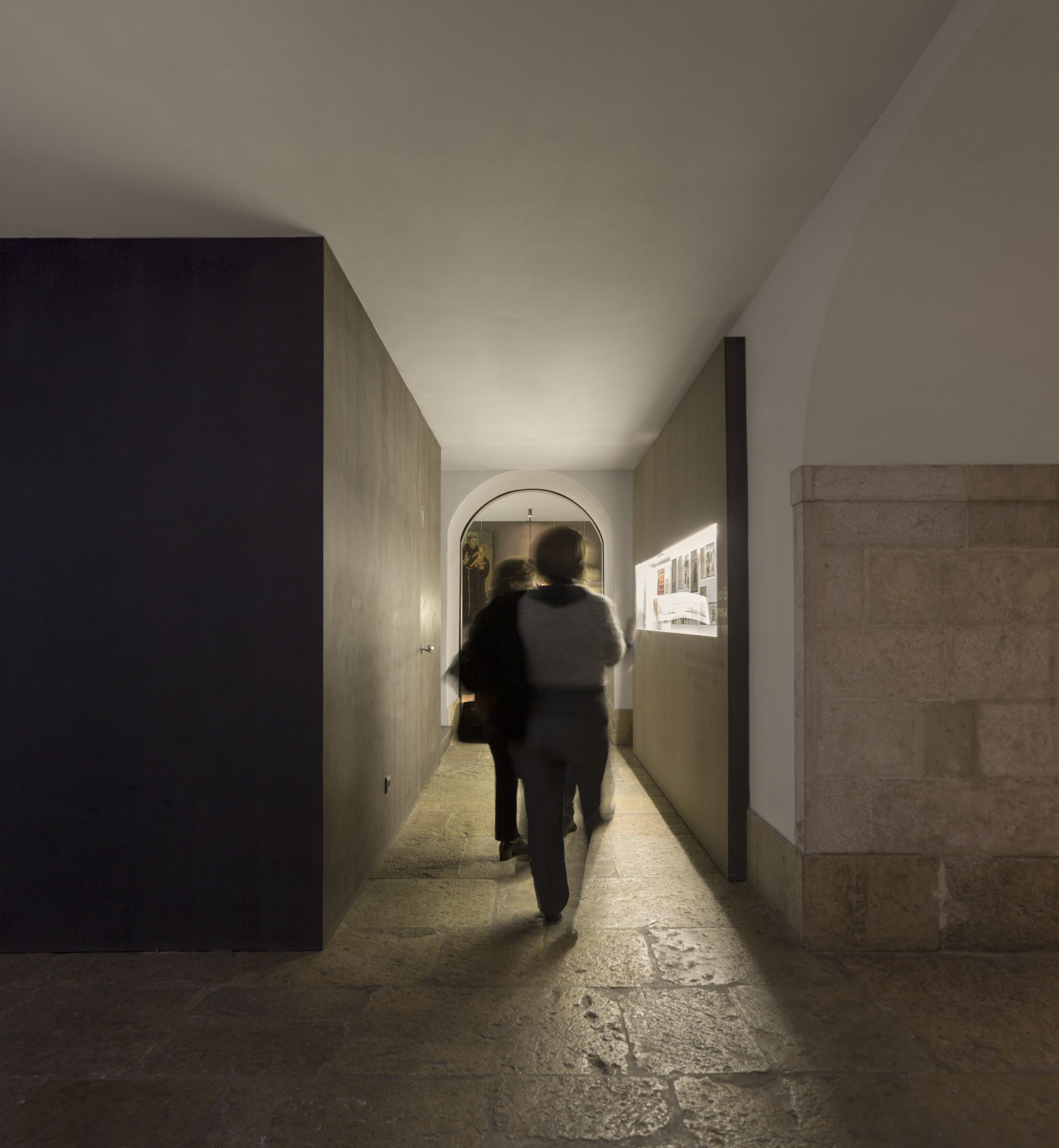
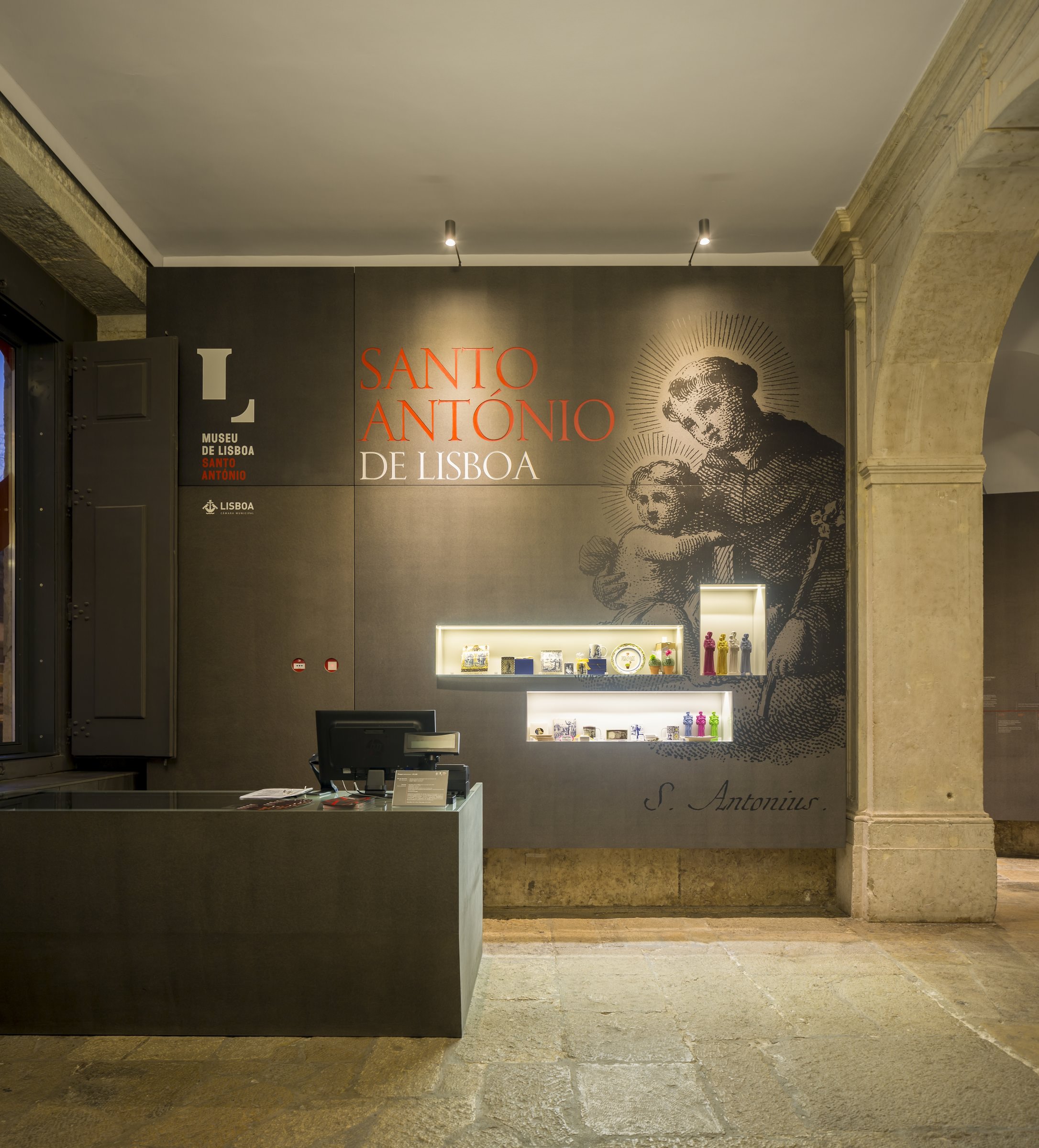
The identity of the site was recovered through the demolition and removal of isolated and characterless additions, in search of the original scale and geometry of the spaces. The solution took the form of new exhibition supports that follow and emphasise the precise geometry of the space while reinforcing the presence of the nineteenth-century stonework. The scale and dimensions of these panels make them both architectural and museographic elements, while simultaneously addressing the museum’s technical requirements.
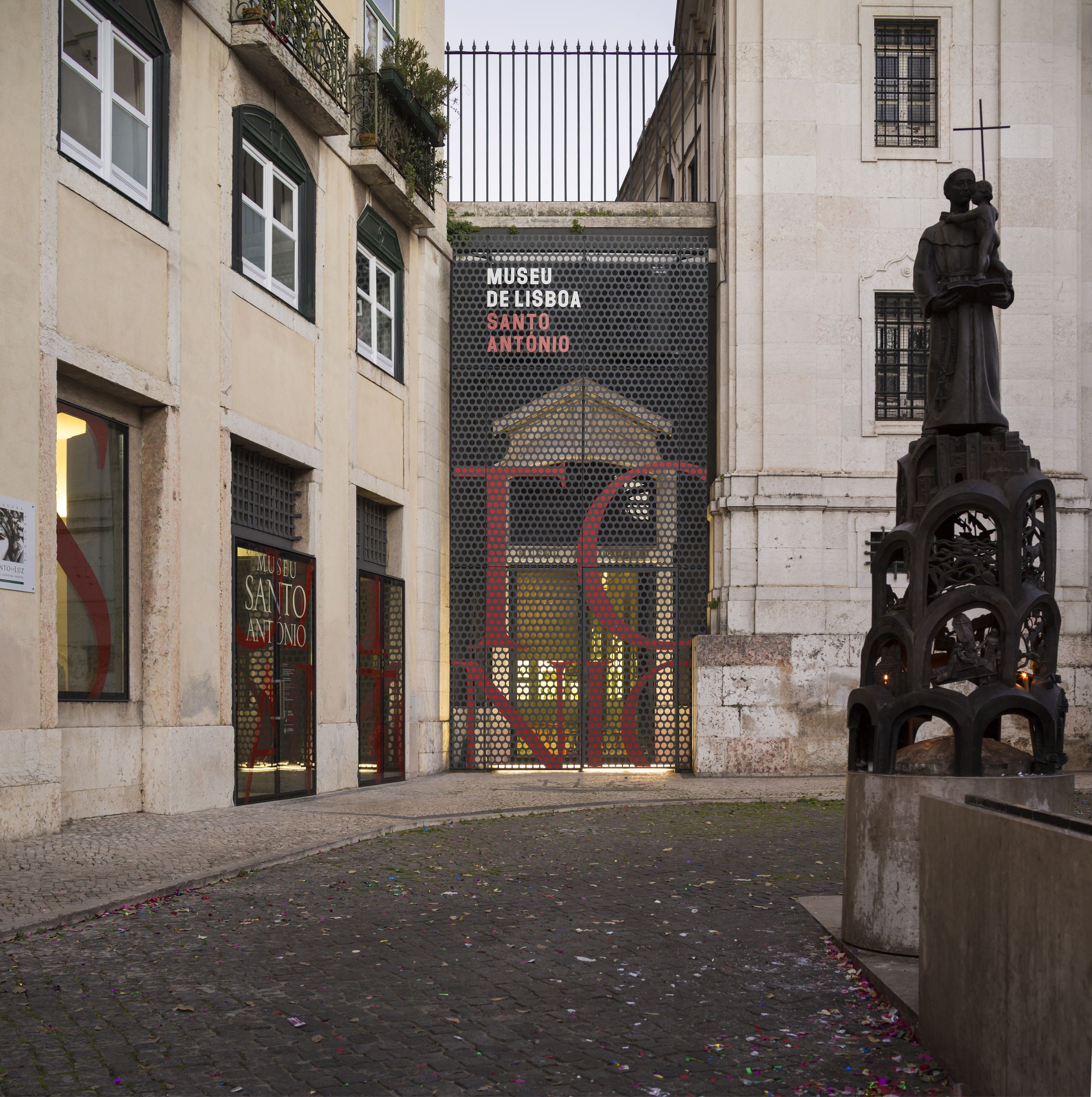
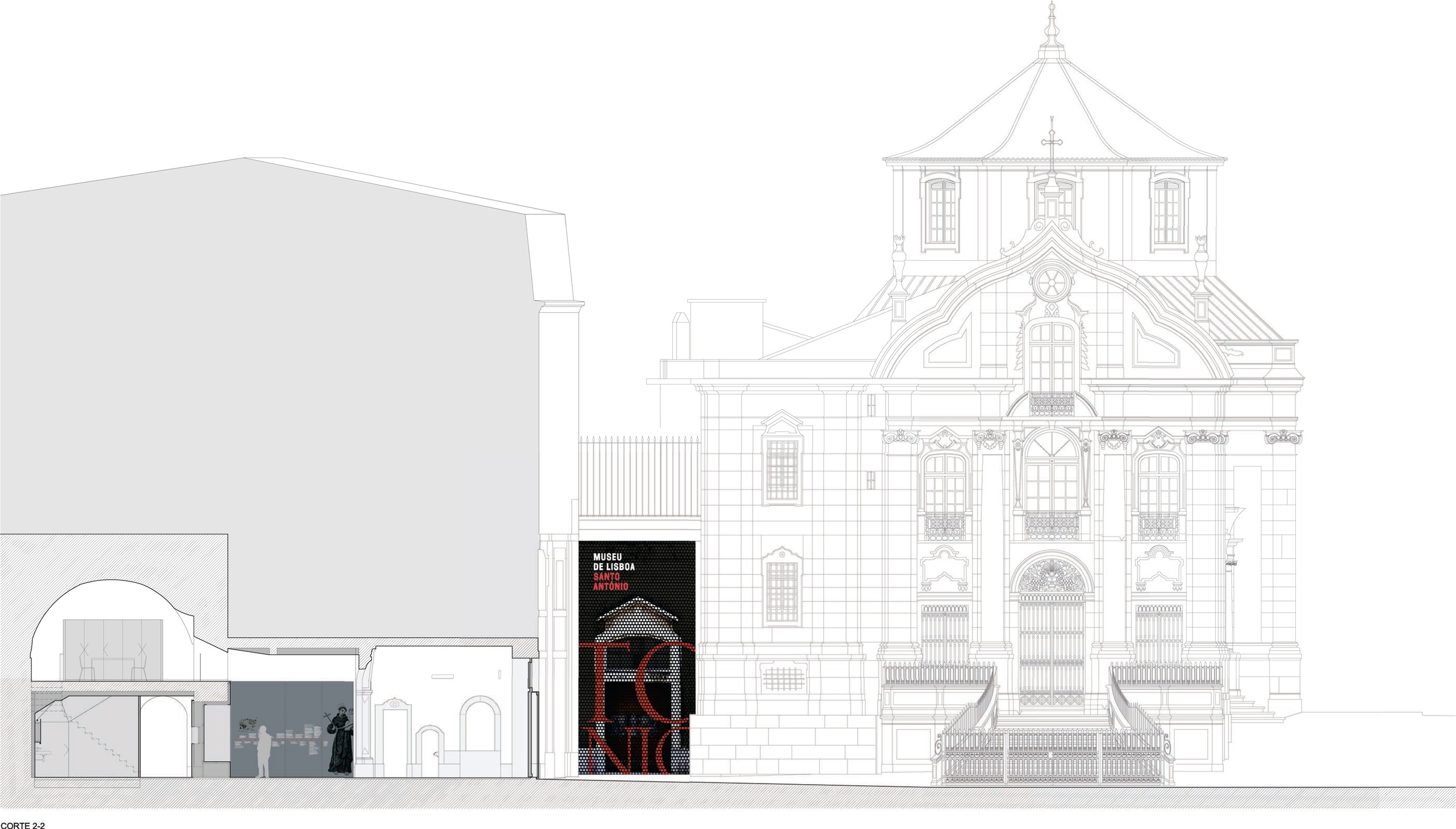
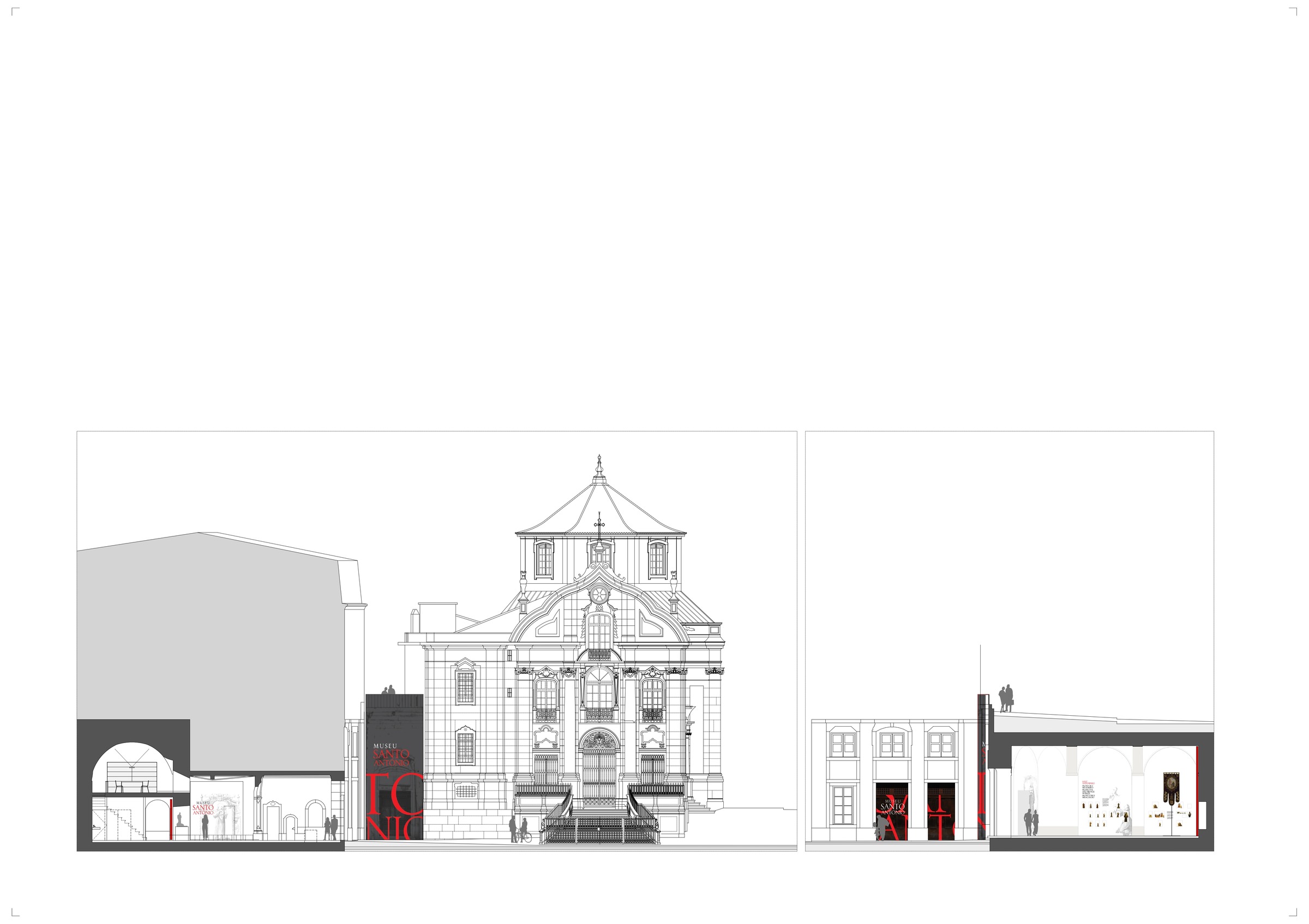
Outside, a perforated metal panel covers the entire façade of the former museum, clarifying the identity of the surrounding buildings, concealing the technical installations and creating a communication surface that highlights the presence of the museum. The semi-transparency of the panel promotes the relationship between the museum’s interior and exterior, the square and the statue of the Saint, while allowing the stone portal of the existing façade to remain visible.