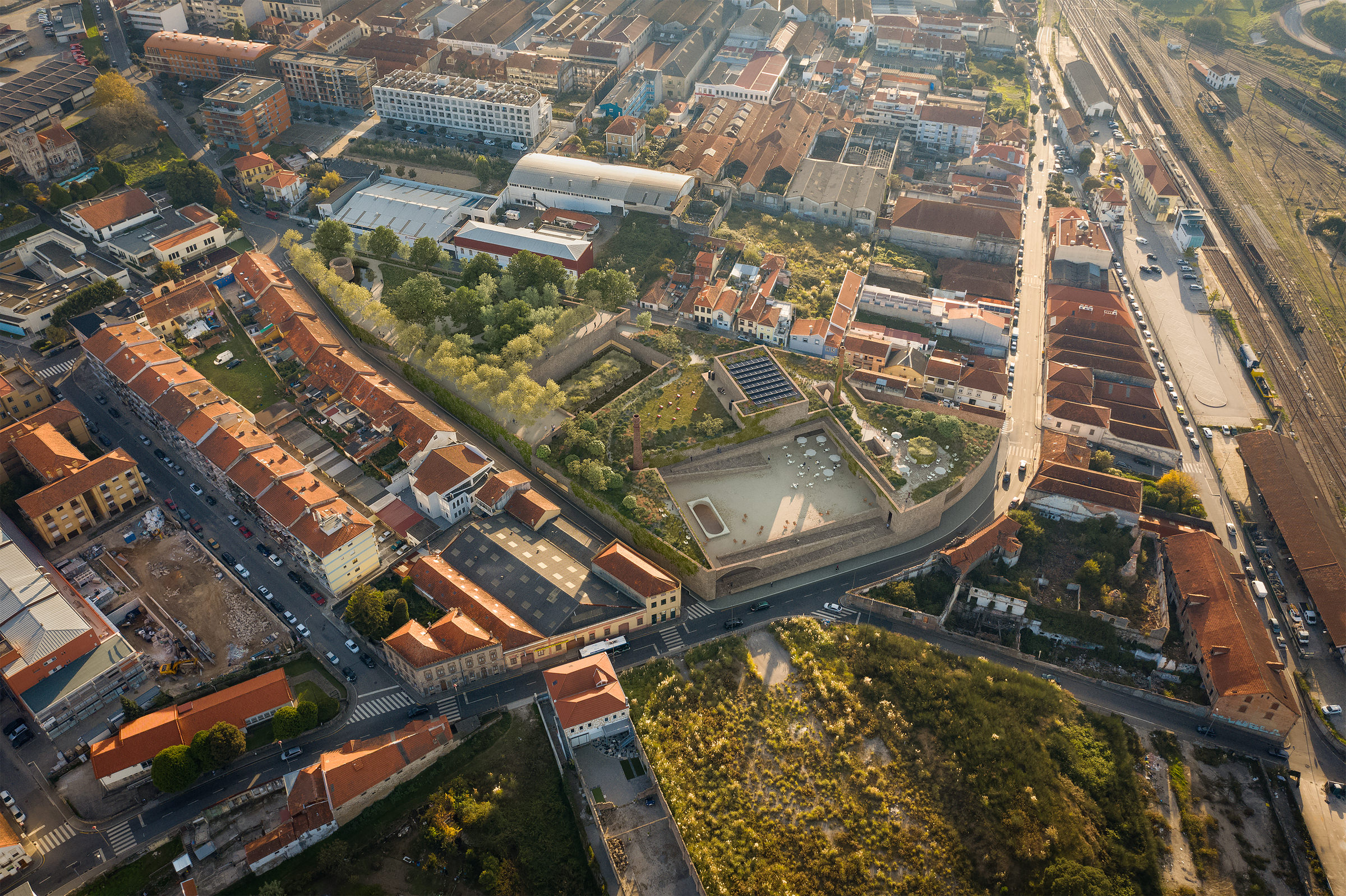
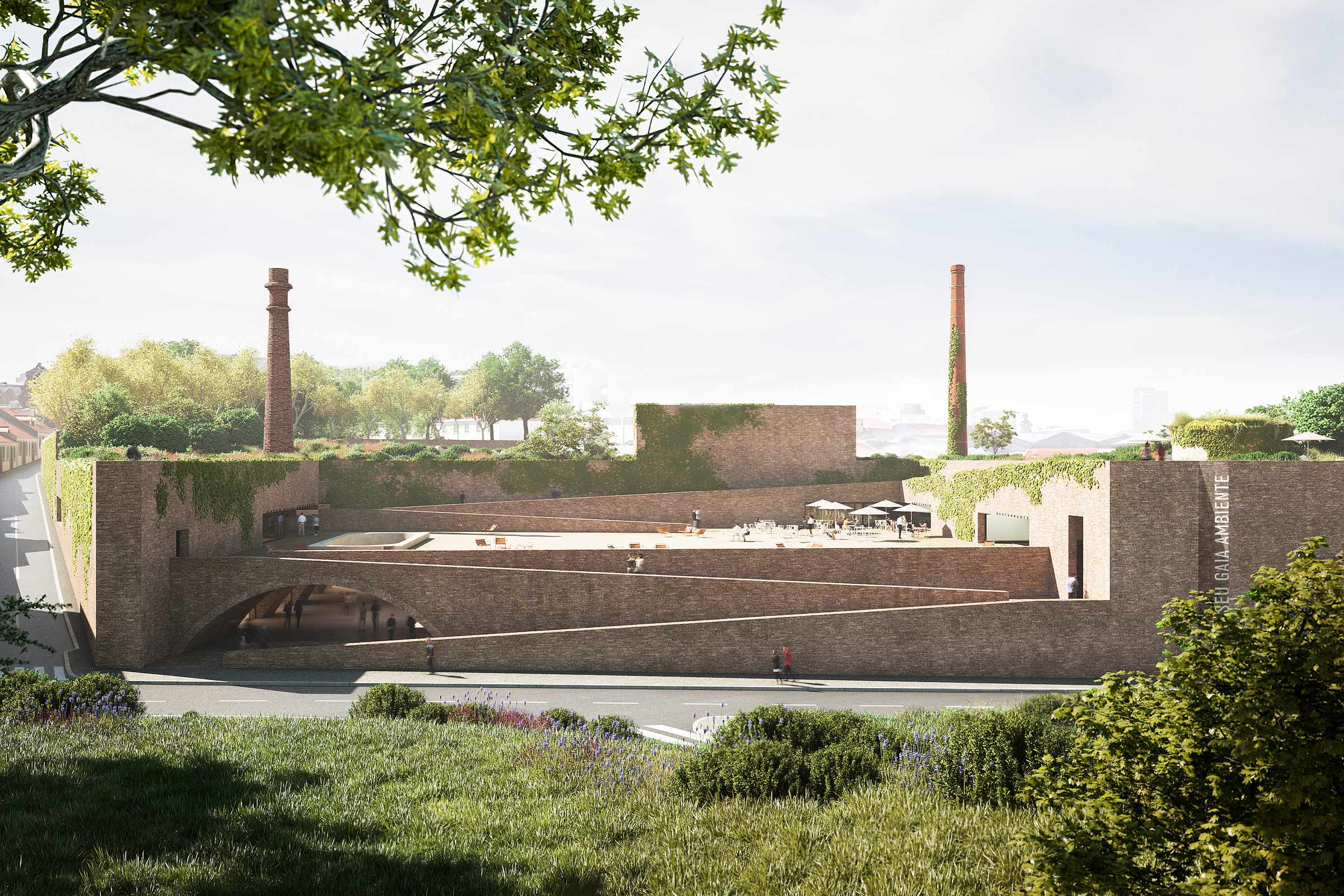
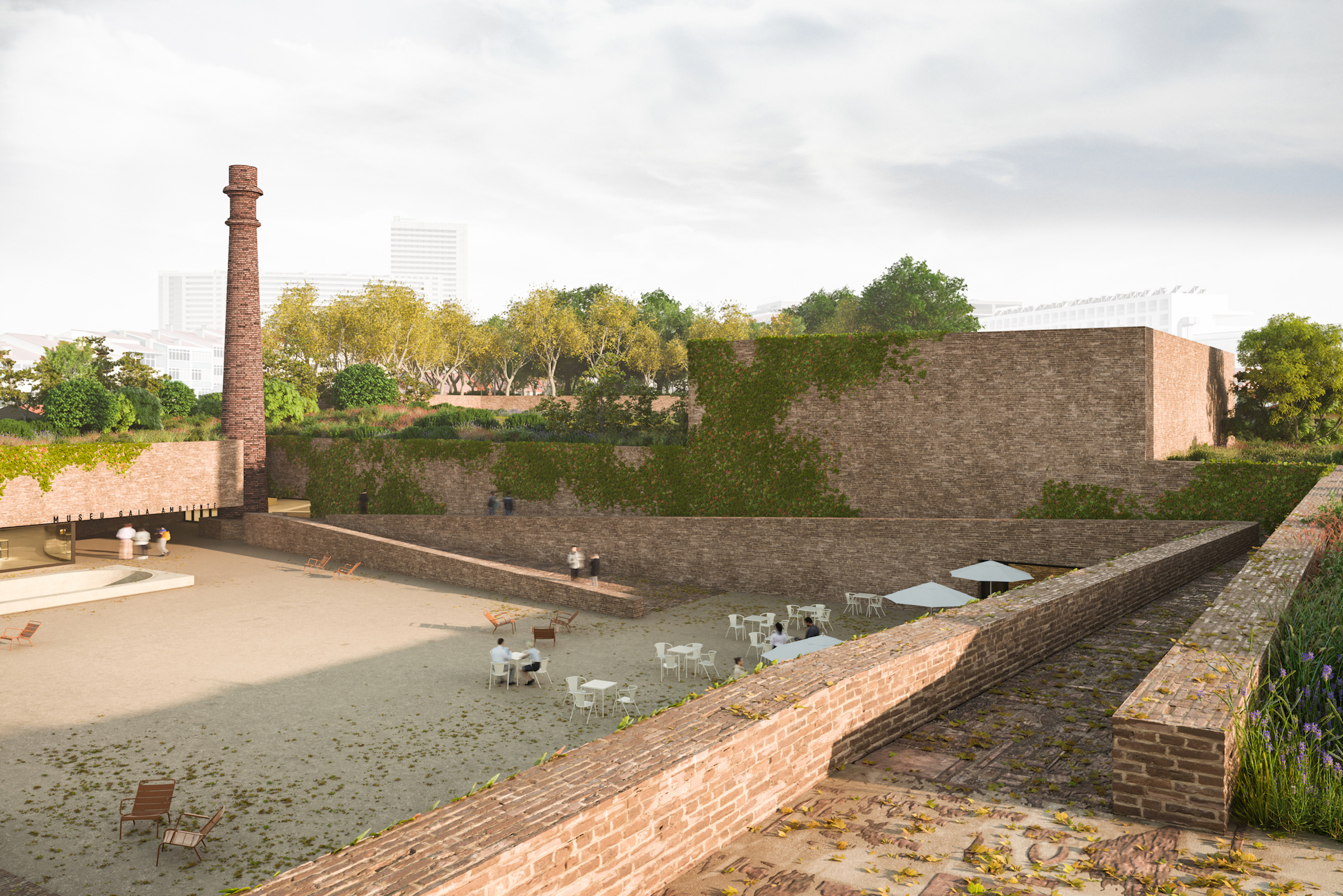
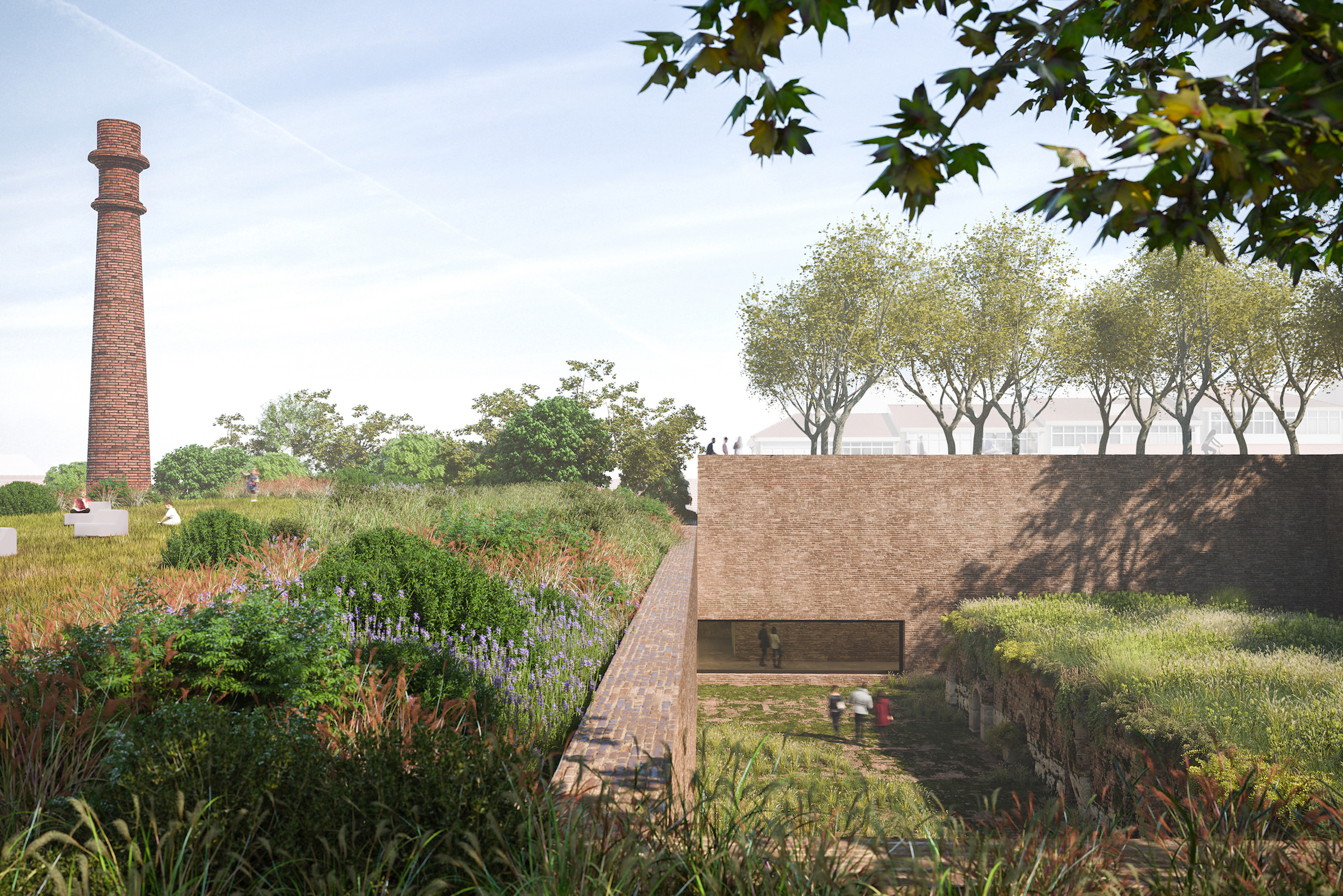
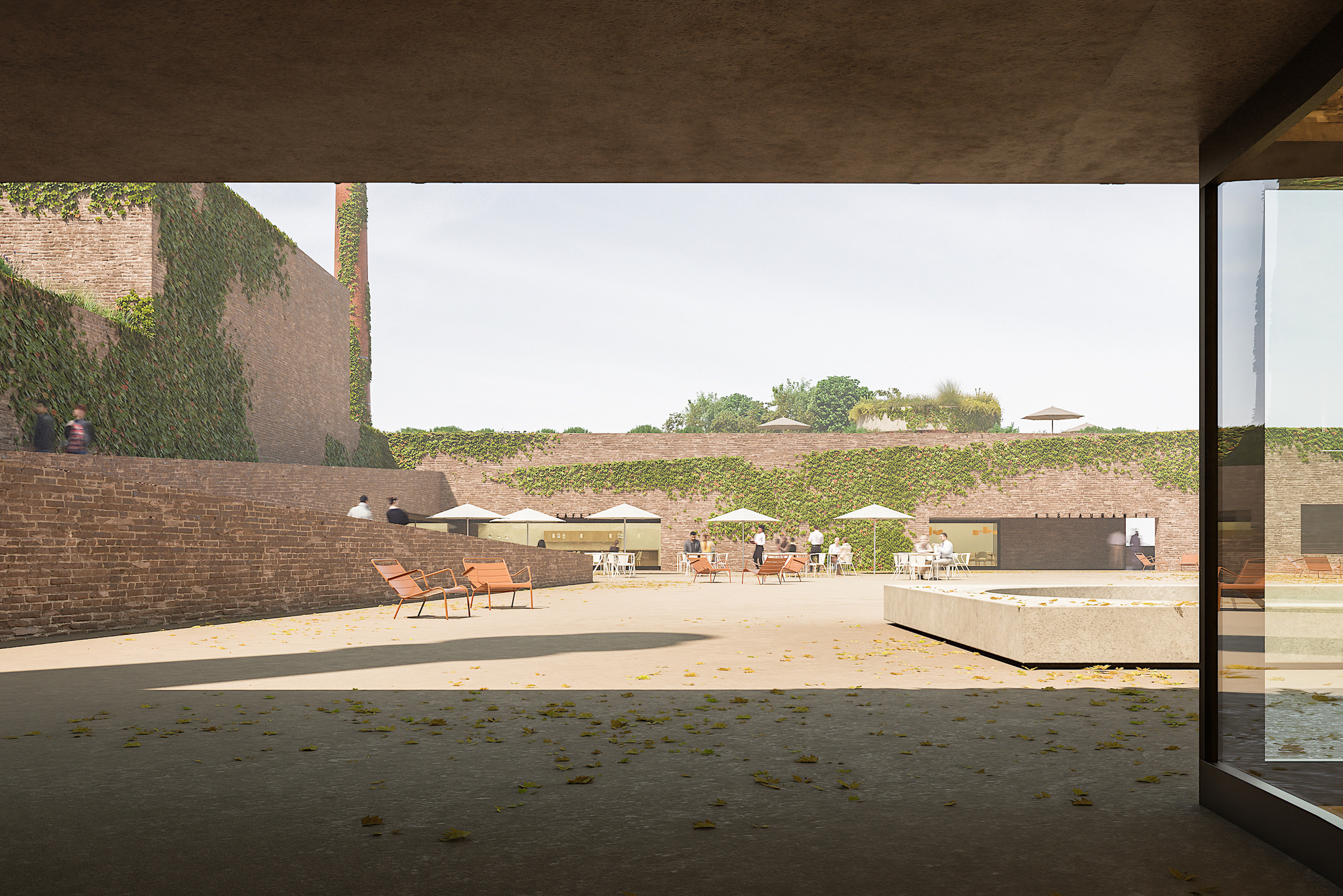
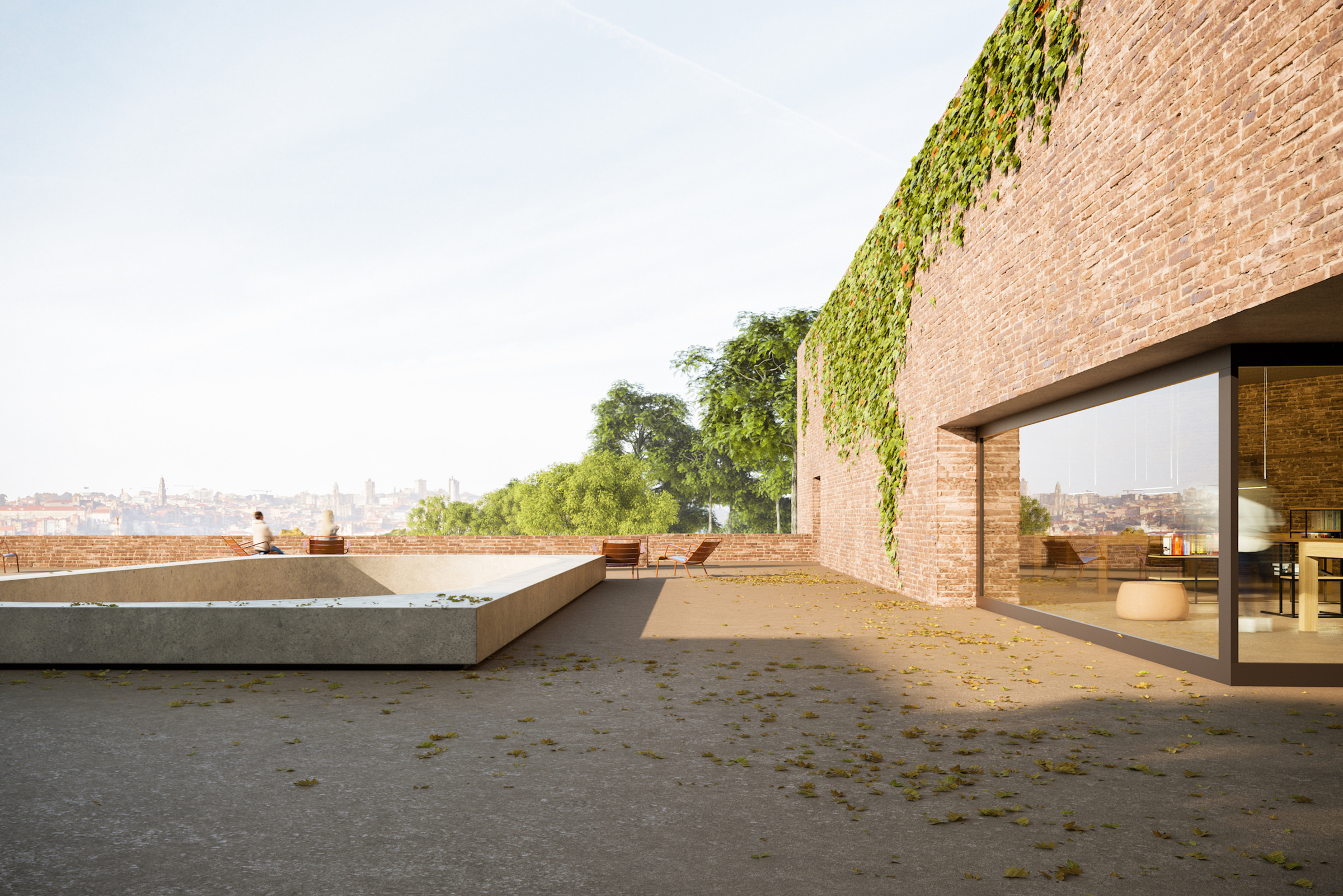
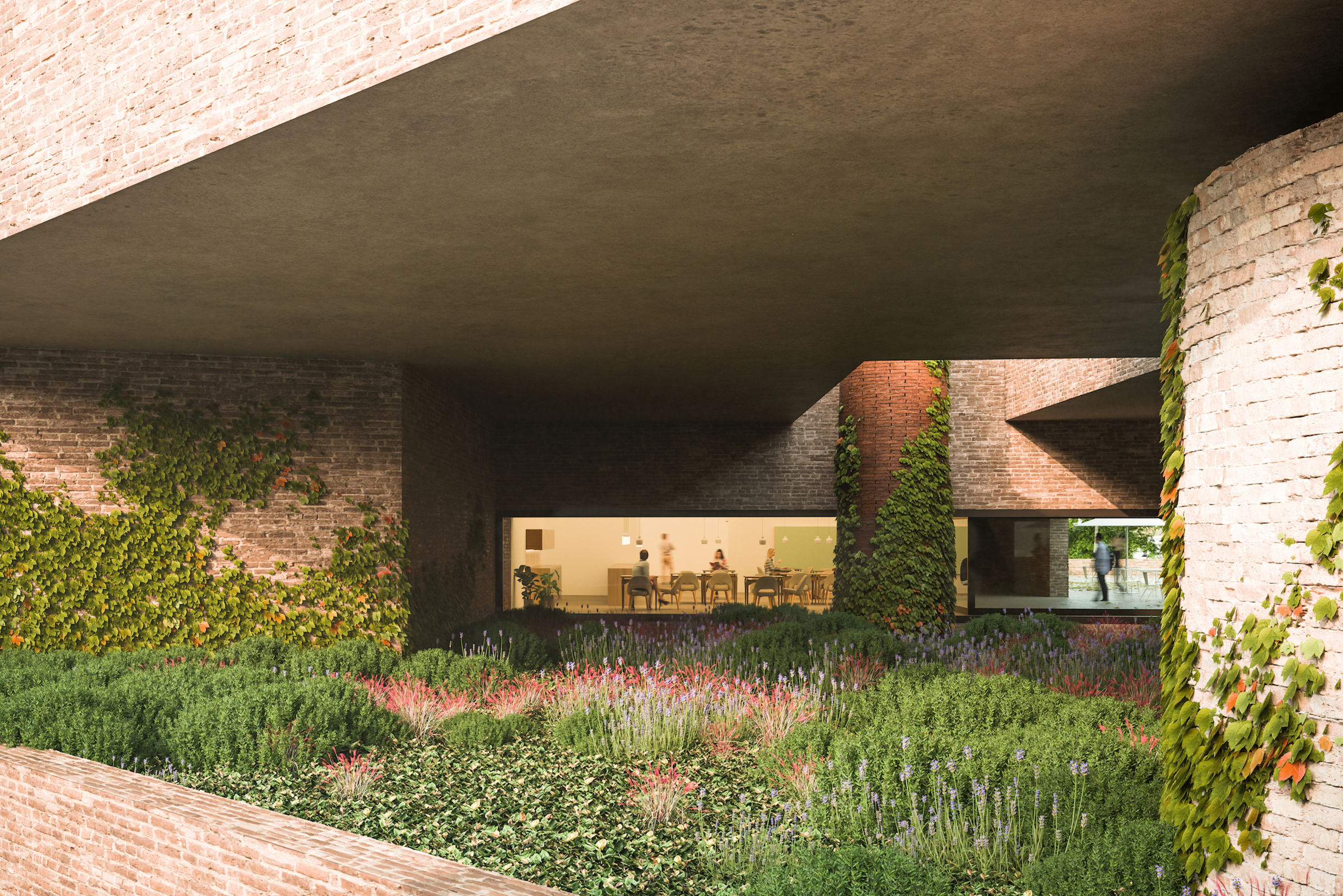
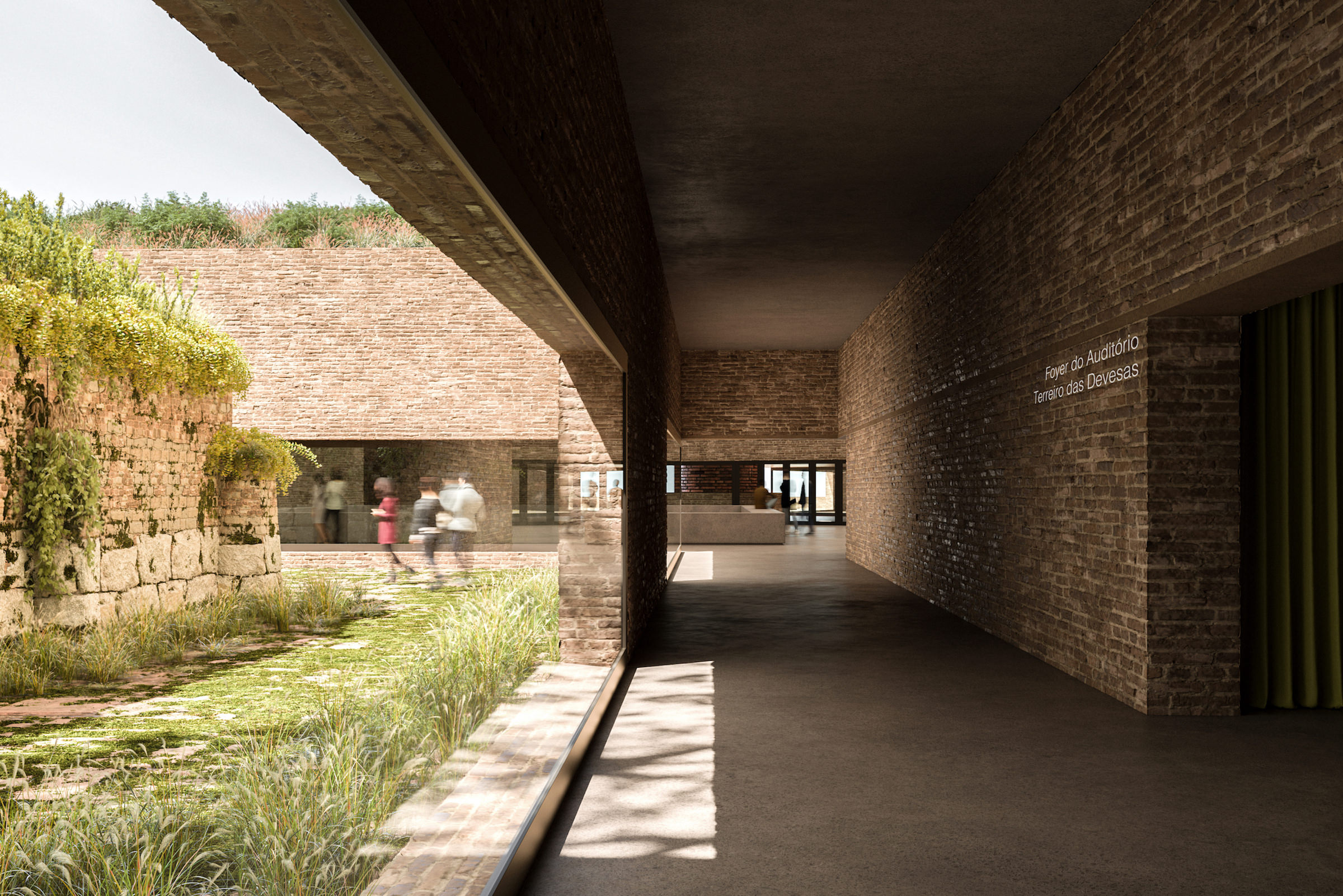
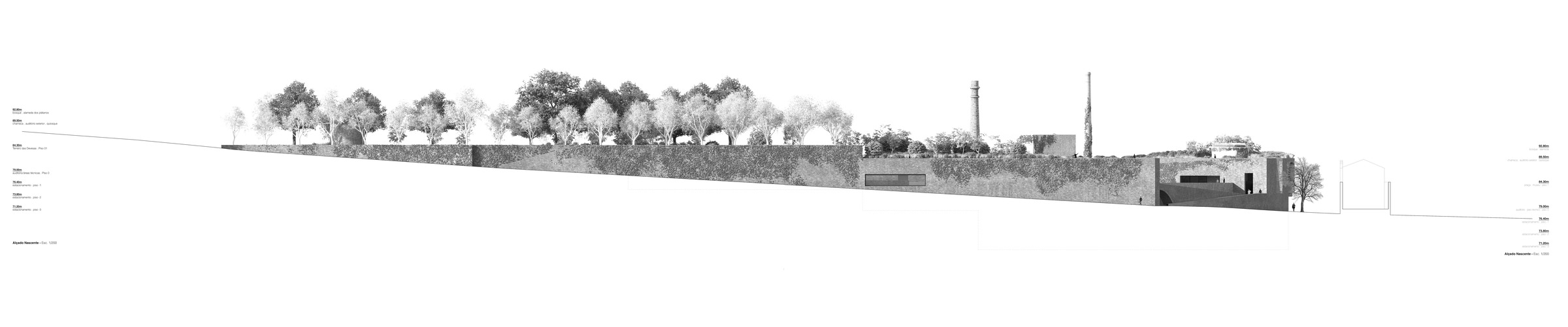
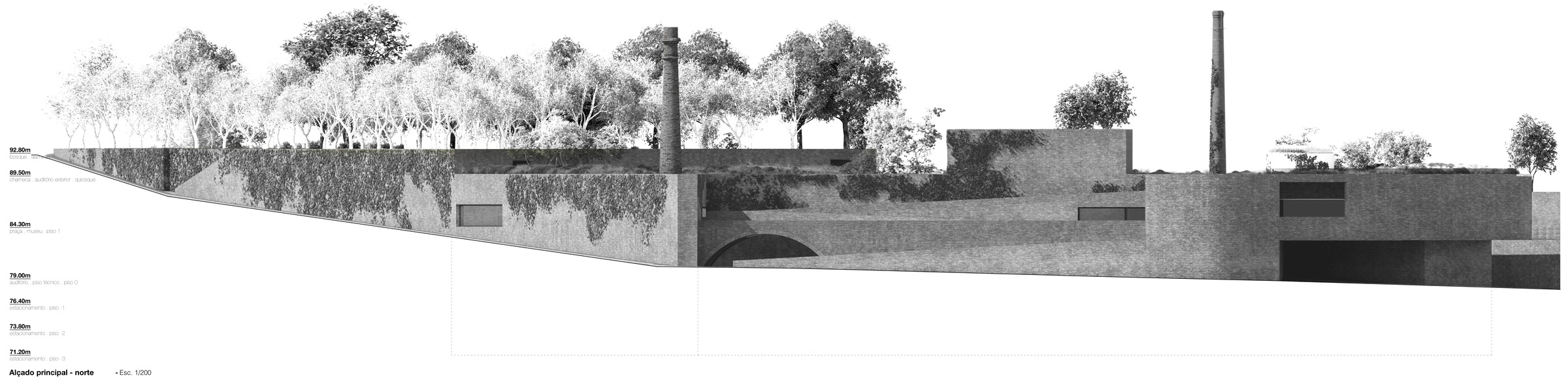
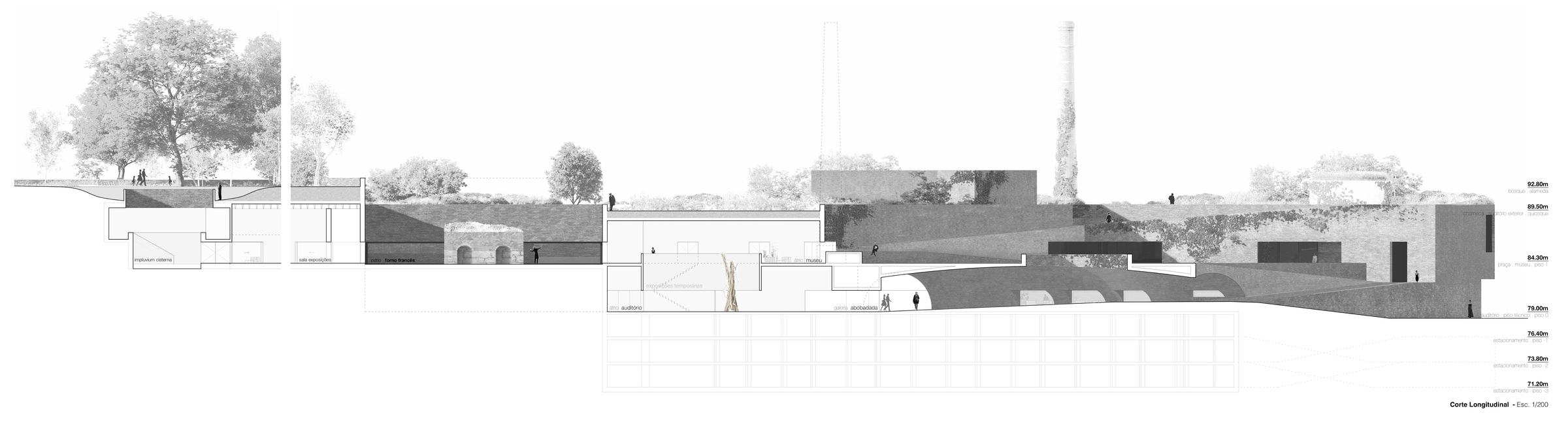
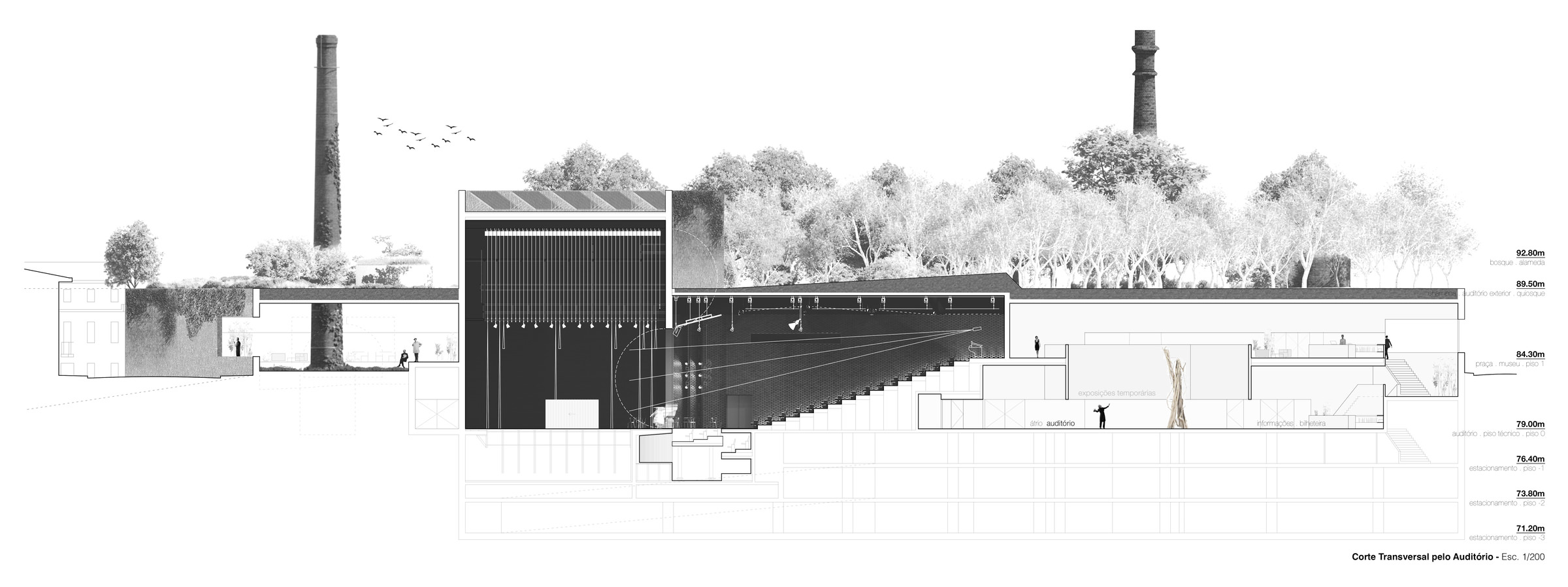
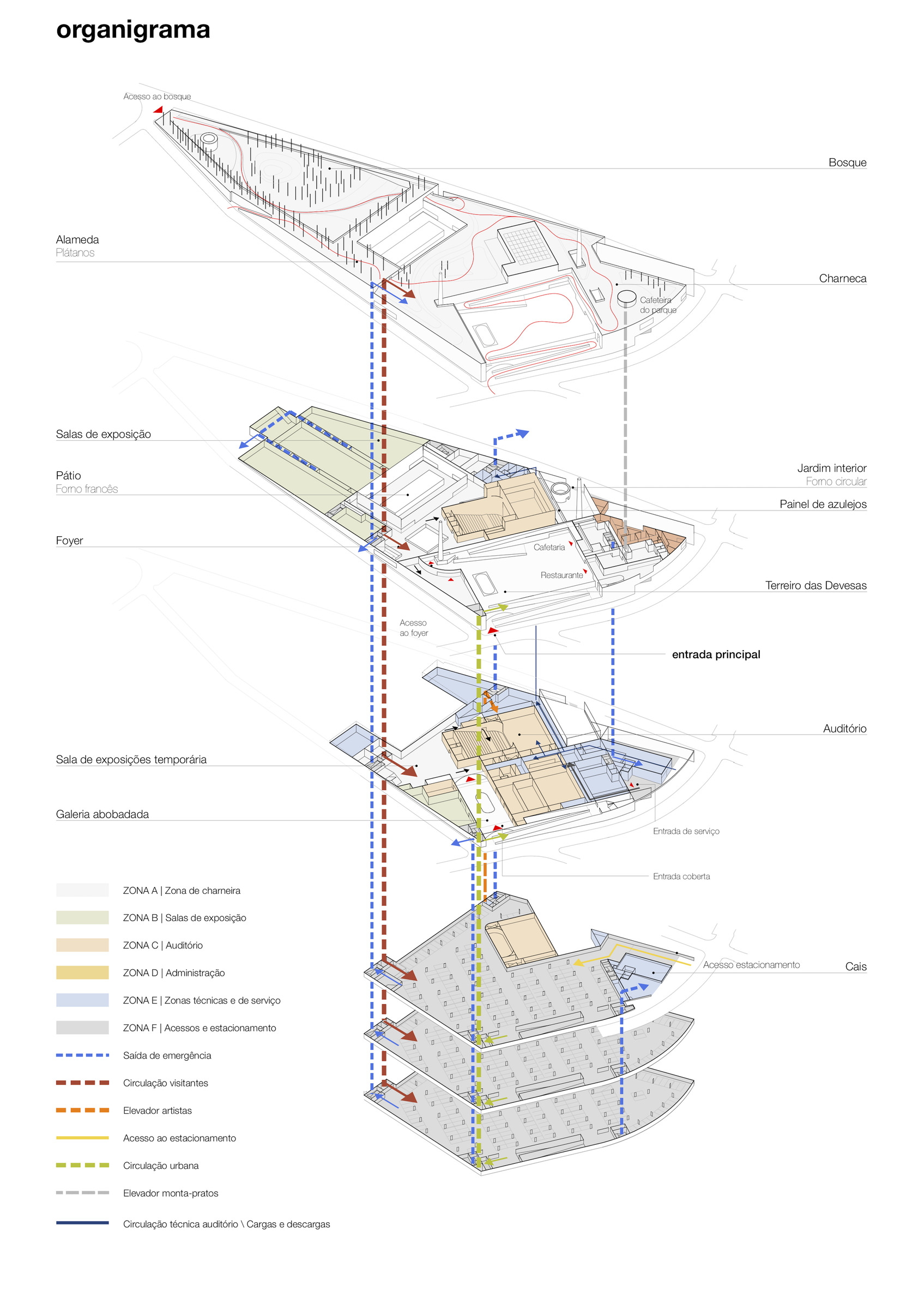
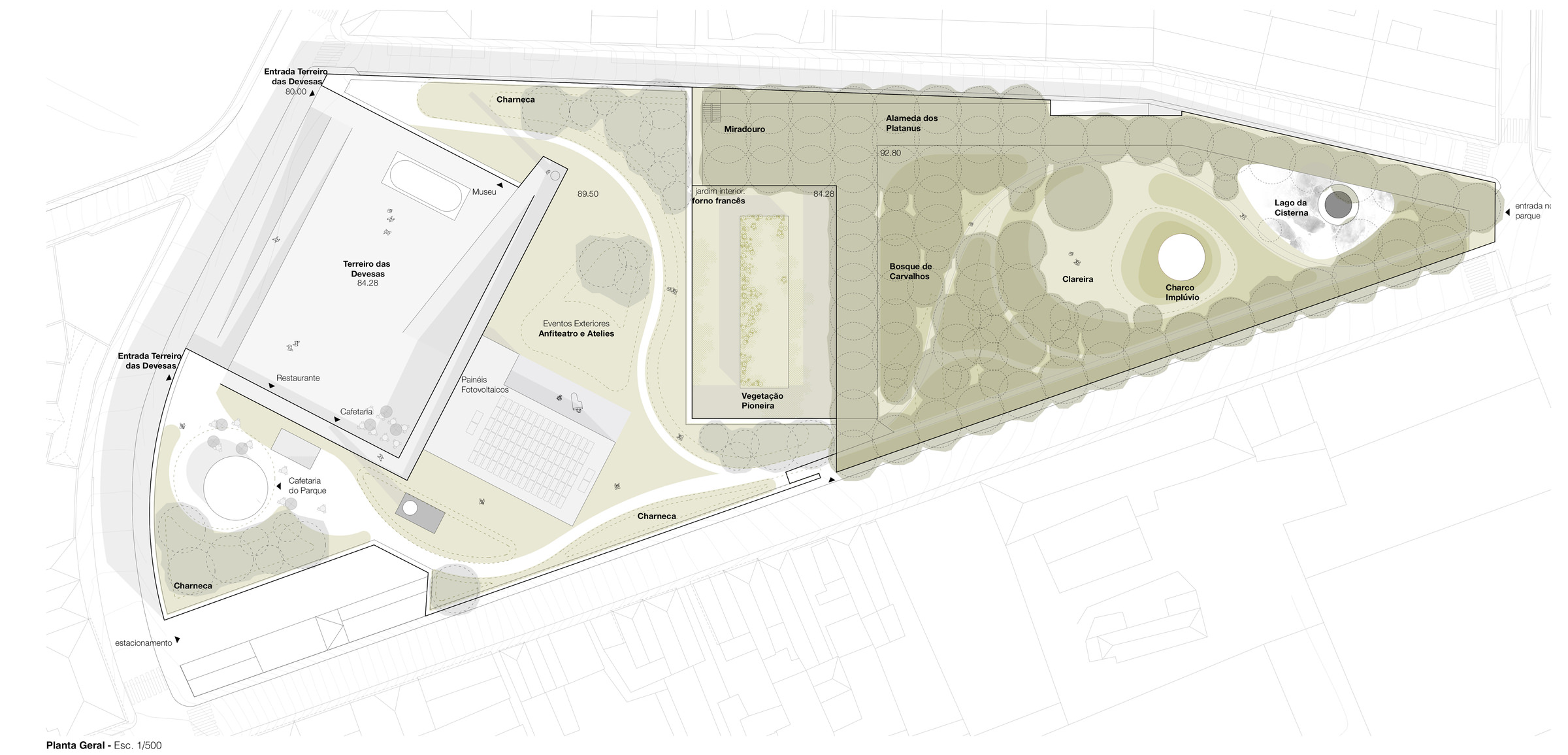
Gaia Museu-Ambiente is conceived as the construction of a landscape analogous to the terraces and platforms that have, for centuries, shaped and domesticated the banks of the Douro River. The transformation of the Factory Ruin into a topography of stepped platforms creates a generous public space: a landscape that accommodates both natural and cultural processes and, through the museum programme, intertwines them within the exhibition narrative while functioning as a public infrastructure.
Two platforms stabilise the hillside, while a sequence of ramps negotiates the changes in level, forming a promenade that meanders between open and enclosed spaces for gathering and contemplation. This sequence recalls both the Passeio das Virtudes in Porto and Bramante’s route to the Cortile del Belvedere, where geometrically ordered paths followed a series of terraces linking the Hippodrome of the Apostolic Palace to the northern summit of the Vatican Hill.
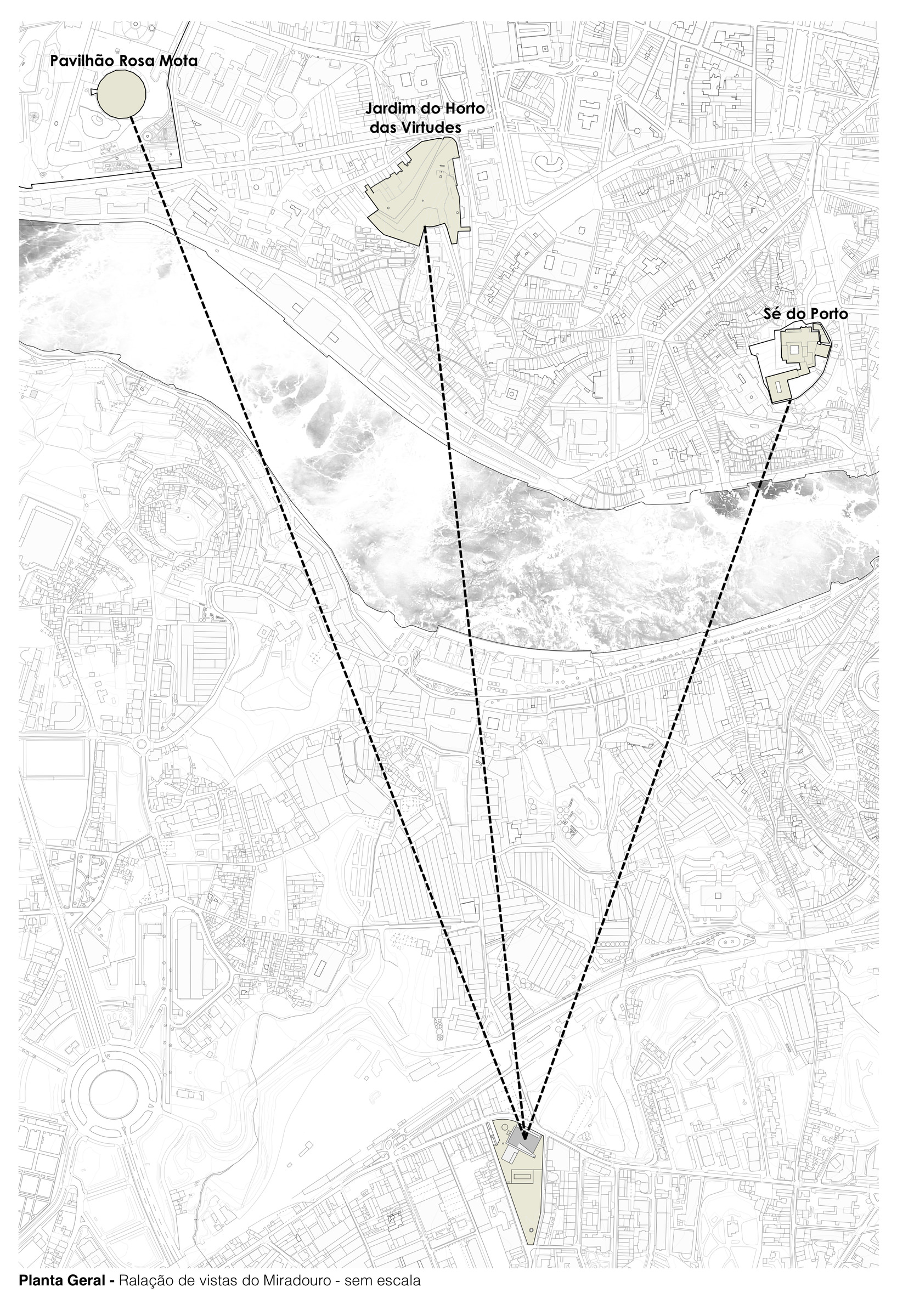
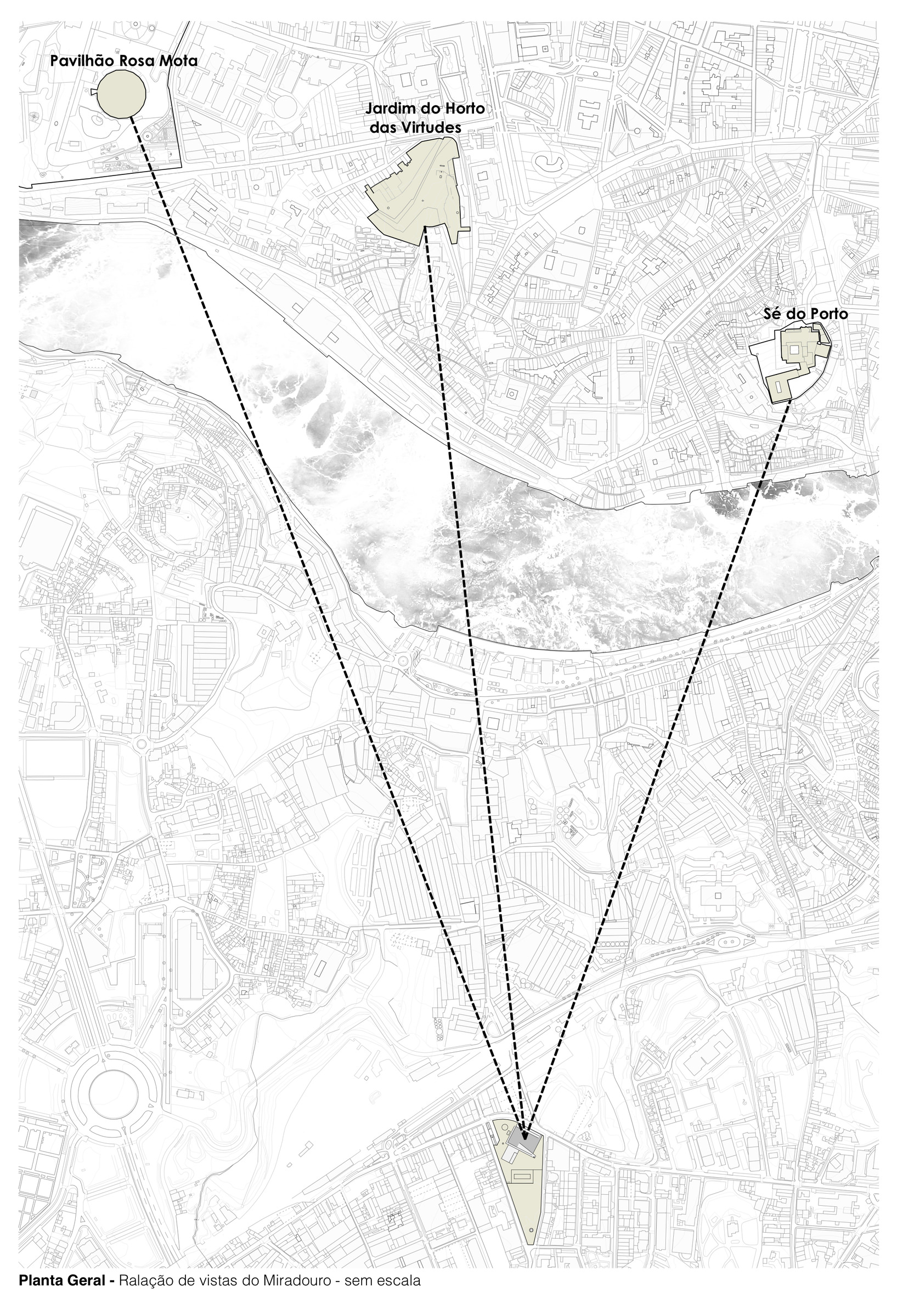
At an intermediate level, a terreiro is carved into the platform and oriented towards the tower of the Porto Episcopal Palace, defining the entrance to the building as a generous urban public space—a new belvedere that restores to Vila Nova de Gaia a view towards Porto, just as the Terreiro da Sé frames the Castle of Gaia, and the Fontaínhas Belvedere looks towards the Monastery of Serra do Pilar.
At the level of Rua do Conselheiro Veloso da Cruz, a vaulted gallery is excavated to form the ground-level entrance to the building, evoking the architectures that shape and retain the landscape—tunnels, wine cellars, buttresses and retaining walls that support the terraced vineyards overlooking the Douro Valley. While the museum building is embedded within the terrain, a park emerges at the surface as a public landscape where visitors encounter the places and ecologies that compose it: Woodland, Heathland, Water Ecologies and Ruin. These ecologies arise as a natural extension of the museum’s tectonic expression—a constructive gesture that reflects upon the relationship between humankind and nature, acknowledging our condition as beings who are intrinsically transformative, yet inherently biophilic.